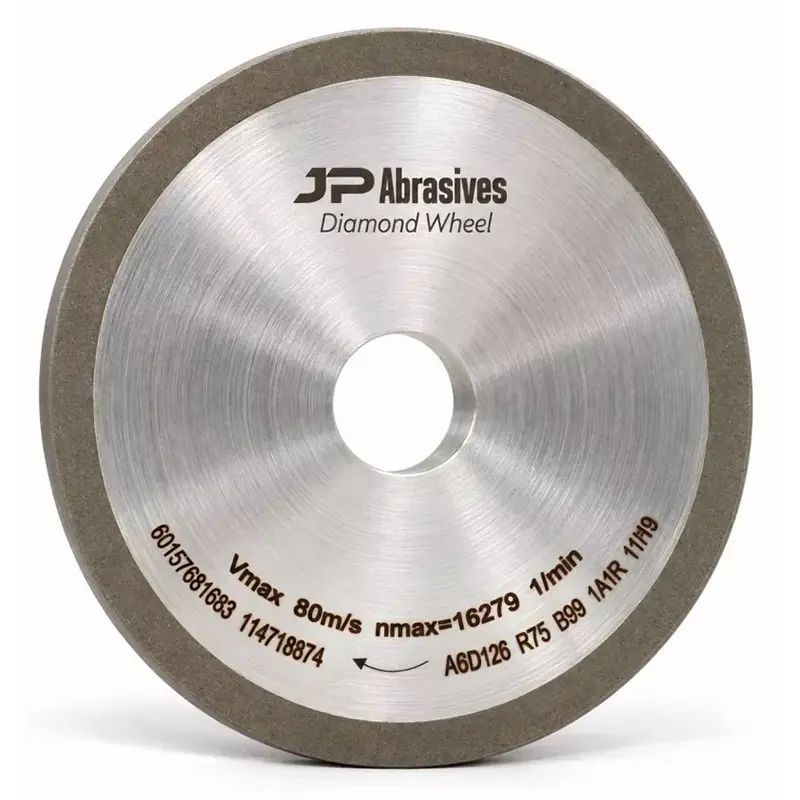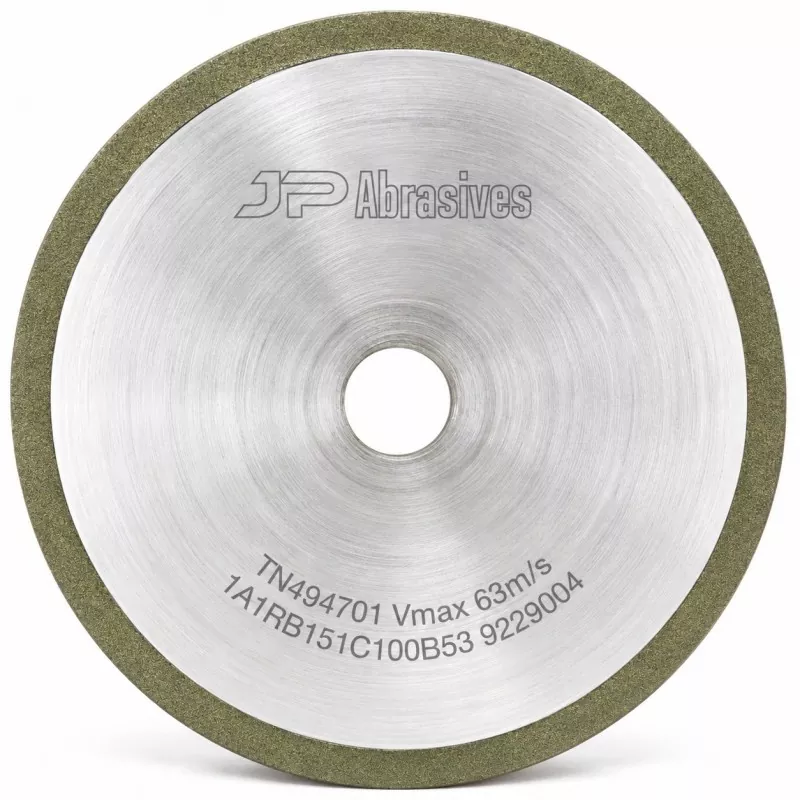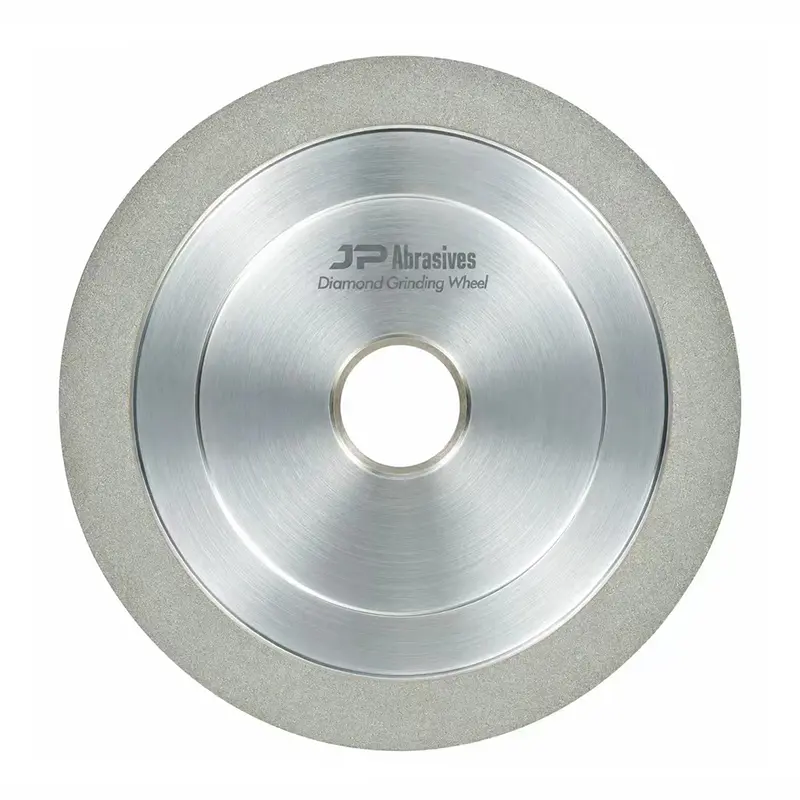
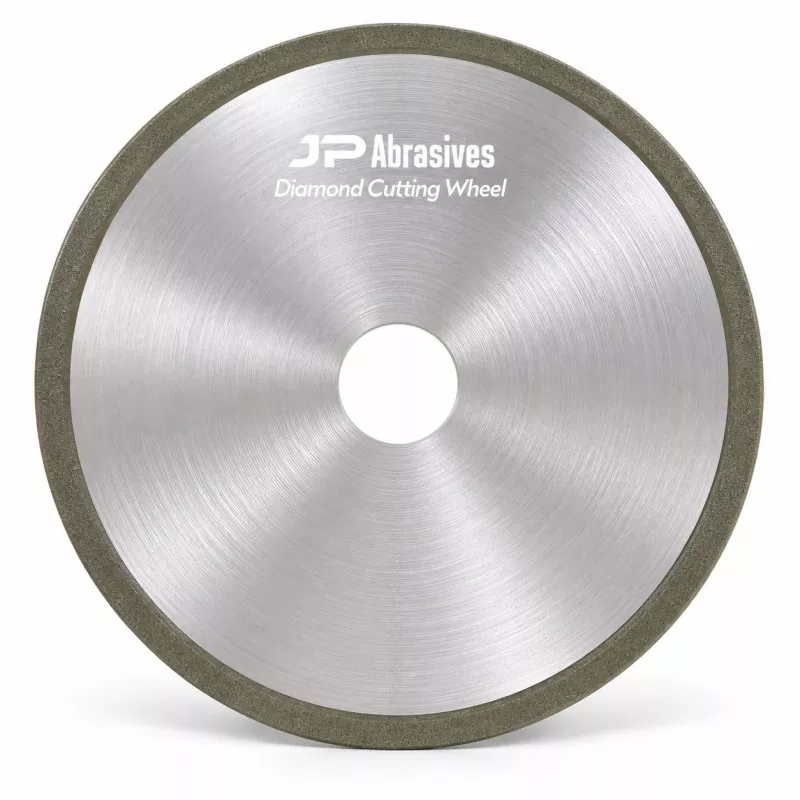
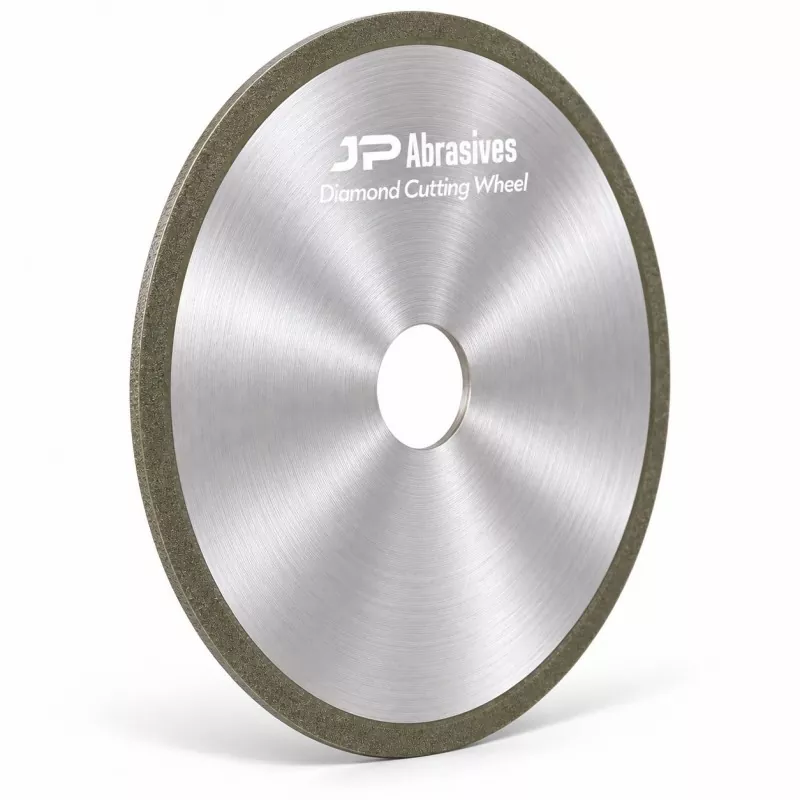
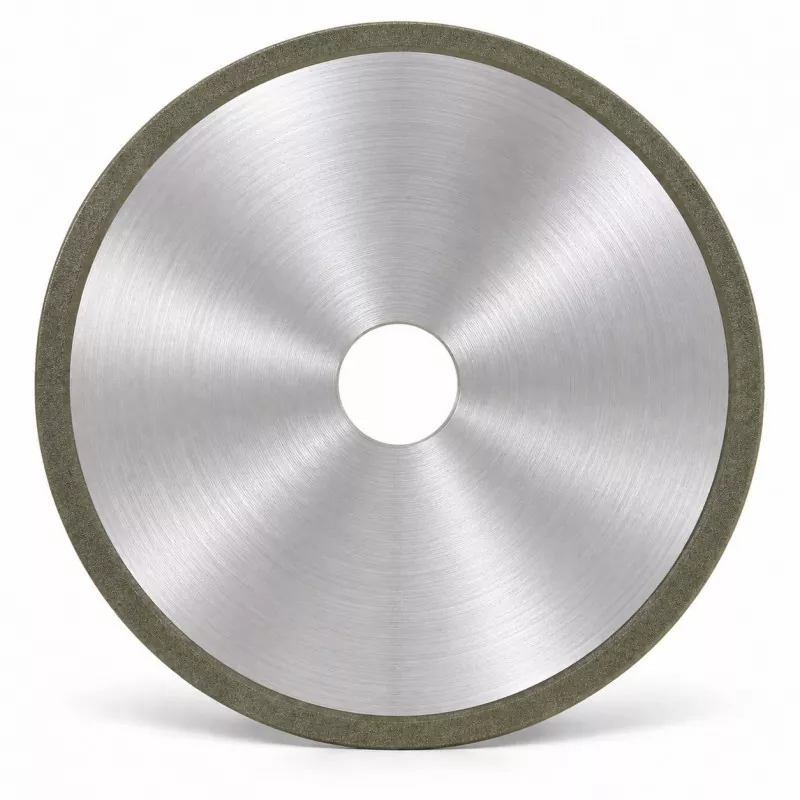
Diamond Precision Cut-Off Wheel
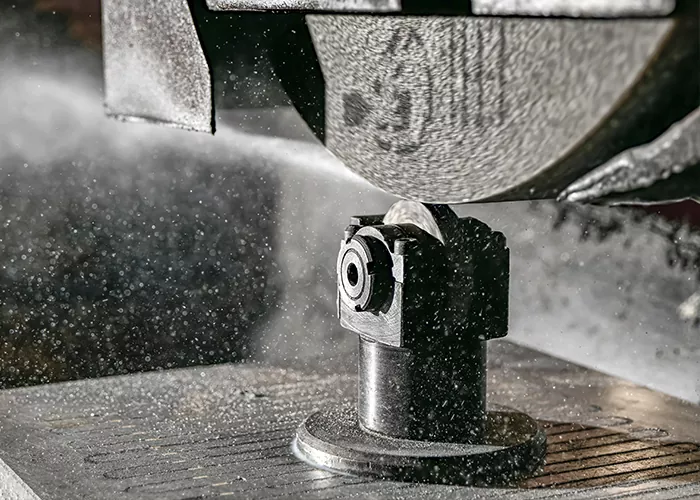
The D3 series Diamond Precision Cut-Off Wheels supplied by JP Abrasives are part of the ultra-hard precision consumable system. They feature a 1A1R thin-edge design, which is different from the general diamond saw blades used in the stone and infrastructure sectors. We rely on a combination of resin and metal systems to customize the diamond particle size and concentration ratio based on the material of the workpiece, the rigidity of the machine tool, and the cooling scheme, to create a cutting solution suitable for high-value brittle and hard materials.
When manufacturing this Diamond Precision Cut-Off Wheel, the manufacturer of JP Abrasives focused on narrow seam cutting and edge protection as the core design concept. They prioritized ensuring a straight and stable cutting trajectory, reducing the risk of edge breakage and size fluctuations at the source, and it is a dedicated tool for separating and slicing workpieces in precision processing production lines.
Product application
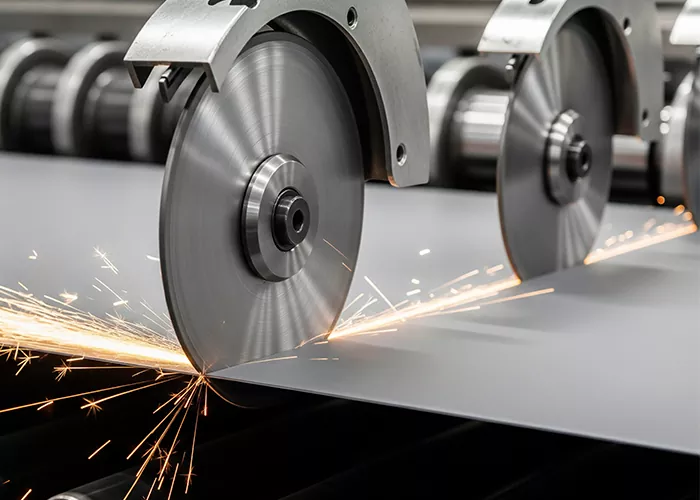
Our Diamond Precision Cut-Off Wheel is mainly used for controlled slicing operations of hard alloy blanks, engineering ceramics, optical glass, quartz, and other difficult-to-machine brittle hard materials.
It can complete processes such as blank cutting, thin sheet slicing, and narrow groove forming, and is suitable for segmental processing of high-priced components before grinding, testing, and assembly.
It is widely used in hard alloy component factories, optical component processing, and special ceramic manufacturing enterprises. It is compatible with precision CNC cutting machines and dedicated slicing equipment. It is not suitable for coarse cutting scenarios such as construction stone and concrete.
Primary Materials & Cutting Conditions
Primary Workpiece Materials
· Tungsten carbide and cemented carbide components
· Technical and advanced ceramics within the approved wheel specification
· Glass components and precision glass parts
· Quartz and selected hard brittle materials
Primary Cutting Operations
· Precision cut-off and component separation
· Thin cutting where material yield is important
· Slotting and narrow-groove generation
· Sectioning of hard or brittle components
· Cutting of small or high-value parts prior to downstream grinding, inspection or assembly
Typical Process Conditions
Wheel selection should be based on material, workpiece thickness, required kerf, cut depth, edge-quality target, machine rigidity, spindle speed, feed rate, coolant condition and production volume. Hard brittle materials can respond differently to the same wheel specification; material-specific validation is therefore required before a specification is released for production.
1A1R — Core D3 Wheel Architecture
The 1A1R configuration provides the thin peripheral cutting geometry required for precision cut-off applications. In D3, 1A1R is treated as a functional cutting platform rather than a general grinding-wheel shape.
The final rim width, wheel diameter, abrasive layer, core design, bore, diamond grit, concentration and bond must be selected for the required kerf and mechanical loading. Thin-wheel design increases the importance of correct mounting, machine condition, operating speed and controlled feed.
Resin Bond & Metal Bond
Resin Bond — Used where controlled cutting action and application-specific balance between cutting behavior, finish and wheel wear are required. It can be configured for precision cutting of approved carbide and hard brittle materials according to the final wheel specification.
Metal Bond — Selected for applications requiring strong abrasive retention and wheel-form durability. Metal-bond 1A1R wheels are particularly relevant to precision cutting of glass, quartz and ceramic materials when supported by the approved application specification.
Bond type is not a quality tier. Resin and metal systems address different cutting conditions. Selection must follow material, kerf requirement, edge condition, wheel thickness, cutting depth, feed, coolant and wheel-life target.
Material-Specific Cutting Requirements
Carbide — Cut-off operations may involve carbide rods, blanks, components or other approved workpieces where controlled separation and reduced material waste are important. The specification should balance cutting rate, wheel wear and cut-edge condition.
Technical Ceramics — Brittle fracture and edge chipping are key process considerations. Wheel specification, feed, coolant, fixturing and workpiece support must be coordinated to control the cut.
Glass — Precision glass cutting requires attention to edge damage, wheel runout, feed stability and coolant. Final suitability depends on glass type, thickness and machine setup.
Quartz — Quartz cutting requires a diamond specification matched to the material and cut geometry. Kerf control, edge condition and wheel durability should be verified in the customer's process.
Search Intent
D3 search demand is centered on precision cut-off and thin-section cutting. Buyers commonly search by wheel function, 1A1R shape, target material and the need for a thin or low-chipping cut.
Primary SEO Search Cluster
diamond precision cut-off wheel · diamond cut off wheel · 1A1R diamond wheel · thin diamond cutting wheel · diamond wheel for carbide cutting · diamond wheel for ceramic cutting · diamond wheel for glass cutting · diamond wheel for quartz cutting · diamond slitting wheel · precision diamond cutting wheel · low chipping diamond wheel
Buyer Search Intent
Source a thin 1A1R diamond wheel for controlled cut-off, sectioning or slotting of carbide, ceramic, glass or quartz, with the specification selected to control kerf, edge damage, dimensional variation and material loss.
Core Buyer Value
Narrow Kerf — A thin, application-matched cutting geometry reduces the width of material removed during separation and supports higher material yield.
Low Chipping — Wheel specification and controlled cutting conditions are selected to limit edge damage on brittle or high-value workpieces.
Reduced Material Loss — Kerf control is especially valuable when cutting expensive carbide, ceramic, glass or quartz components and blanks.
Cutting Accuracy — Stable wheel geometry, correct mounting and controlled feed support repeatable cut location and dimensional consistency.
Edge Quality — Cleaner cut edges can reduce the amount of secondary grinding, lapping or finishing required after separation.
Process Economics — Wheel price is evaluated together with material yield, wheel life, cutting time, reject rate and secondary finishing cost.
Process Advantages
1. Thin-edge cutting structure with adjustable cutting width, reducing the loss of valuable raw materials, improving the utilization rate of raw materials, and lowering the cost per unit of material.
2. The adhesive solution can be flexibly switched. The resin-based adhesive is suitable for light-load and situations requiring a smooth cutting edge; the metal-based adhesive has stronger diamond holding force and is suitable for long-term continuous production, with a longer wear life.
3. The diamond particles are evenly arranged, the cutting action is smooth and controllable, reducing the cracking of brittle materials, and the edge condition of the cut workpiece is good, significantly reducing the time for subsequent fine grinding and polishing processes.
4. The entire solution is matched with customer equipment parameters, including custom parameters such as the diameter of the grinding wheel, outer diameter, and the thickness of the abrasive layer, to ensure smooth main shaft operation and reduce size deviations caused by vibration.
5. Pre-process flow process verification is conducted. Before production, sample tests will be carried out based on the customer's cooling method, feed speed, and production capacity target to confirm stable yield before delivering in batches, and it is suitable for standardized mass production and OEM branding requirements.
Technical Selection Parameters
1. Workpiece Material — Identify exact material type and grade where available: carbide, ceramic composition, glass type, quartz or another approved hard material.
2. Workpiece Dimensions — Provide thickness, diameter or cross-section and the geometry to be separated or slotted.
3. Cutting Operation — Define cut-off, sectioning, slotting or narrow-groove cutting, including cut depth and whether the cut is through or partial.
4. Required Kerf / Wheel Thickness — State the maximum acceptable kerf or required wheel thickness where defined by the process.
5. Edge Quality Requirement — Define acceptable chipping, breakout, edge condition or downstream finishing requirement.
6. Diamond Grit & Concentration — Select according to material, cut quality, cutting rate and wheel-life target. Publish only approved JP Abrasives specifications.
7. Bond System — Select resin or metal bond according to material, wheel geometry, edge-quality target and production conditions.
8. Machine / Spindle / Mounting — Provide machine make/model, spindle configuration, arbor/bore, flange condition and programmed speed.
9. Feed & Coolant — State feed rate or cycle strategy and coolant type/delivery where applicable.
10. Production Target — Define pieces per shift, acceptable wheel life, cut time, reject rate and material-yield objective.
Recommended Qualification Metrics
· Kerf width and kerf consistency
· Edge chipping / breakout after cutting
· Cut straightness and dimensional consistency
· Cutting time per part
· Wheel wear and usable wheel life
· Number of acceptable cuts per wheel
· Material yield / scrap generated by the cut
· Secondary grinding or finishing required
· Reject and rework rate
· Total cutting cost per accepted component
Material Yield & Cost per Accepted Cut
For precision cut-off of high-value materials, abrasive cost is only one part of the purchasing decision. A wider-than-required kerf consumes additional material, while chipping or dimensional variation can create scrap or additional finishing.
A practical commercial model is: Wheel Cost + Material Lost in Kerf + Cutting Time + Secondary Finishing + Reject/Rework Risk = Total Precision Cutting Cost. The preferred KPI is cost per accepted cut or cost per accepted component under a defined process.
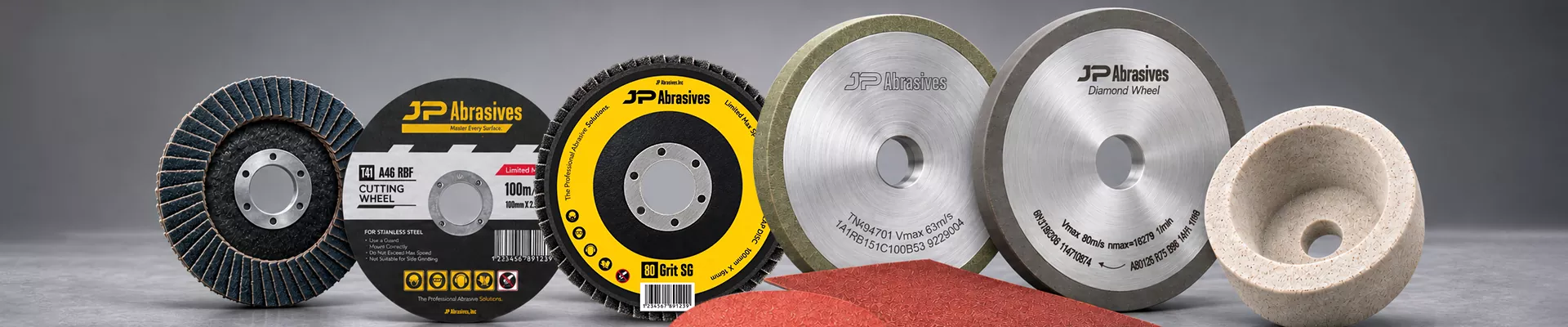
D3 Position within JP Abrasives Diamond Range
| D1 — Diamond Grinding Wheels for Carbide | Carbide components; OD, surface, cylindrical and centerless grinding. Core value: Efficient Carbide Grinding. |
| D2 — Diamond Wheels for CNC Tool Grinding | Carbide cutting tools; fluting, gashing, relief, OD and end-face grinding. Core value: Complete Tool Grinding Solution. |
| D3 — Diamond Precision Cut-Off Wheels | Carbide, ceramic, glass and quartz; precision cut-off, thin cutting and slotting. Core value: Clean Precision Cutting. |
| D4 — Diamond Grinding Wheels for Ceramics & Hard Materials | Technical ceramics, glass, quartz and other hard brittle materials; precision grinding. Core value: Precision & Surface Quality. |
RFQ Information for Industrial Buyers
· Workpiece material and exact grade/type
· Workpiece dimensions and thickness
· Cut-off / sectioning / slotting application
· Required cut depth
· Target kerf or wheel thickness
· Edge-quality / chipping requirement
· Required wheel OD, thickness and bore
· Current wheel specification or benchmark product
· Machine brand/model and spindle configuration
· RPM / wheel speed
· Feed rate or cycle time
· Coolant type and delivery
· Current wheel life / cuts per wheel
· Current issue: chipping, kerf, wheel wear, cut time, accuracy or material loss
· Monthly or annual consumption
· JP Abrasives brand / OEM / Private Label requirement
Safety & Technical Data
Thin superabrasive cut-off wheels must be selected, mounted and operated according to the approved wheel specification, machine requirements and applicable safety instructions. Maximum operating speed must never be exceeded. Correct flanges, guarding, wheel inspection, alignment and appropriate PPE are required.
Final website technical tables must publish exact dimensions, bore, rim width, bond, grit, concentration, maximum operating speed, coolant requirements and machine compatibility only after the corresponding JP Abrasives SKU has been verified.
Frequently Asked Questions
What is a Diamond Precision Cut-Off Wheel used for?
It is used for controlled separation, thin cutting and slotting of approved hard materials such as carbide, technical ceramics, glass and quartz.
What does 1A1R mean in the D3 range?
1A1R is the core cut-off wheel configuration used to create a thin peripheral diamond cutting section. Final dimensions and rim construction must follow the approved application specification.
What is the difference between D3 and D1?
D1 removes material by grinding carbide components. D3 separates or slots the workpiece by precision cutting and is evaluated by kerf, edge quality and cutting accuracy.
What is the difference between D3 and construction diamond blades?
D3 is an industrial precision cut-off series for hard materials on compatible precision equipment. It is not positioned as a segmented, turbo or continuous-rim blade for concrete, masonry or field tile cutting.
Should resin bond or metal bond be selected?
Selection depends on material, wheel thickness, kerf, edge-quality requirement, cut depth, coolant and wheel-life target. The bond should be specified for the actual process.
What information is required for a quotation?
Provide material, dimensions, cutting operation, cut depth, kerf or wheel thickness, edge-quality target, machine, wheel size, speed, coolant, current wheel and production volume.
Request an Application Review / Request a Quote
For precision cut-off applications, submit: Material + Workpiece Dimensions + Cut-Off/Slotting Operation + Cut Depth + Target Kerf/Wheel Thickness + Edge Quality + Wheel Size/Bore + Machine/Spindle + RPM + Feed + Coolant + Current Wheel + Wheel Life + Quantity + JP Brand/OEM.
JP Abrasives — Professional Abrasive Solutions. Master Every Surface.
Send Inquiry
Contact Info
-
Address
China:No.263,Central Street,Dadian Town,Junan County,Linyi City,Shandong Province,China
-
Tel
-
Email