Diamond Grinding Wheel for Ceramics and Hard Materials
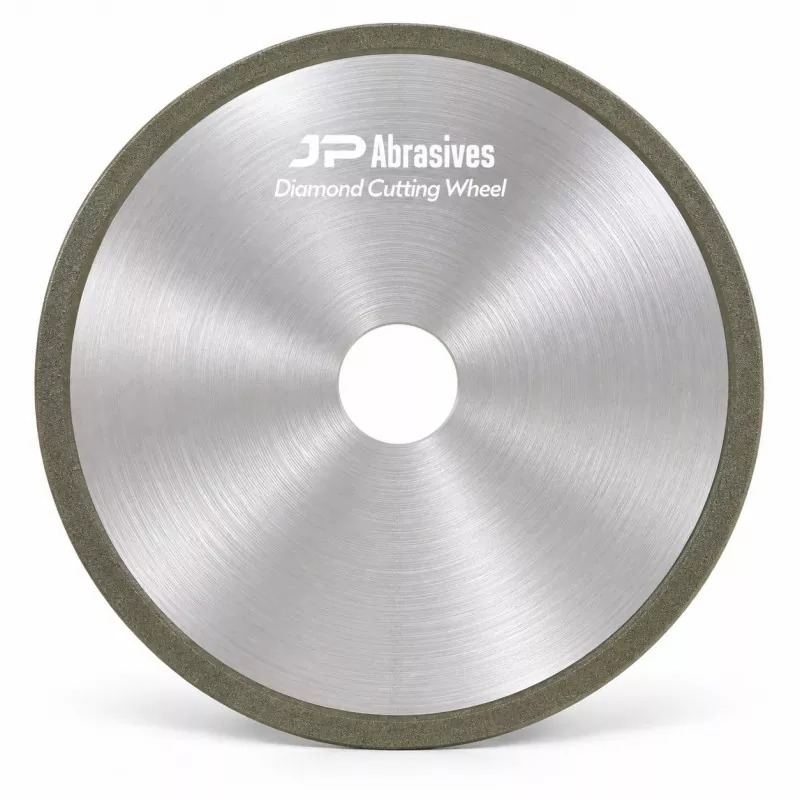
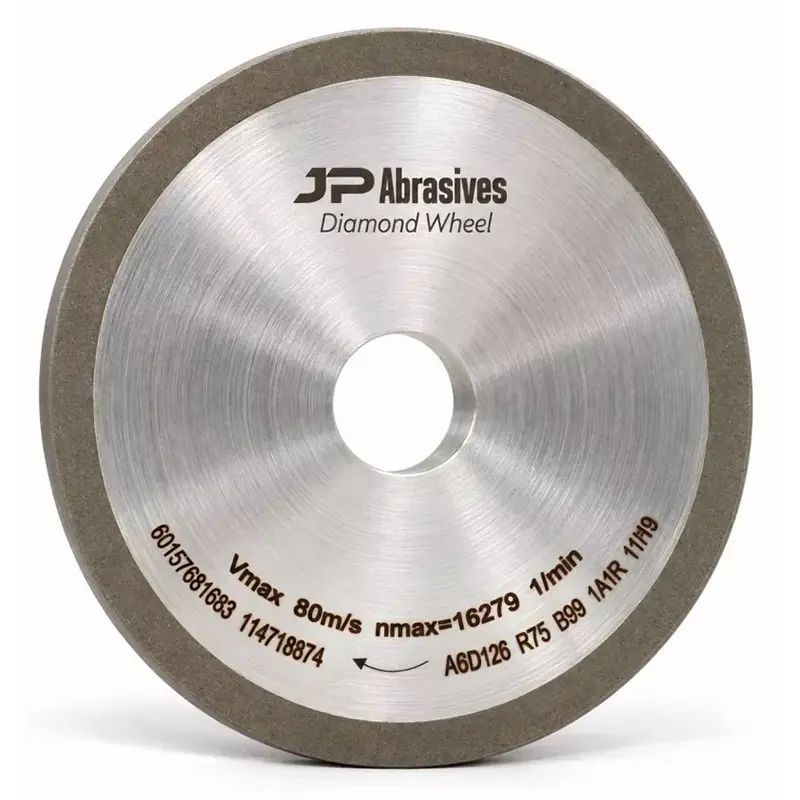
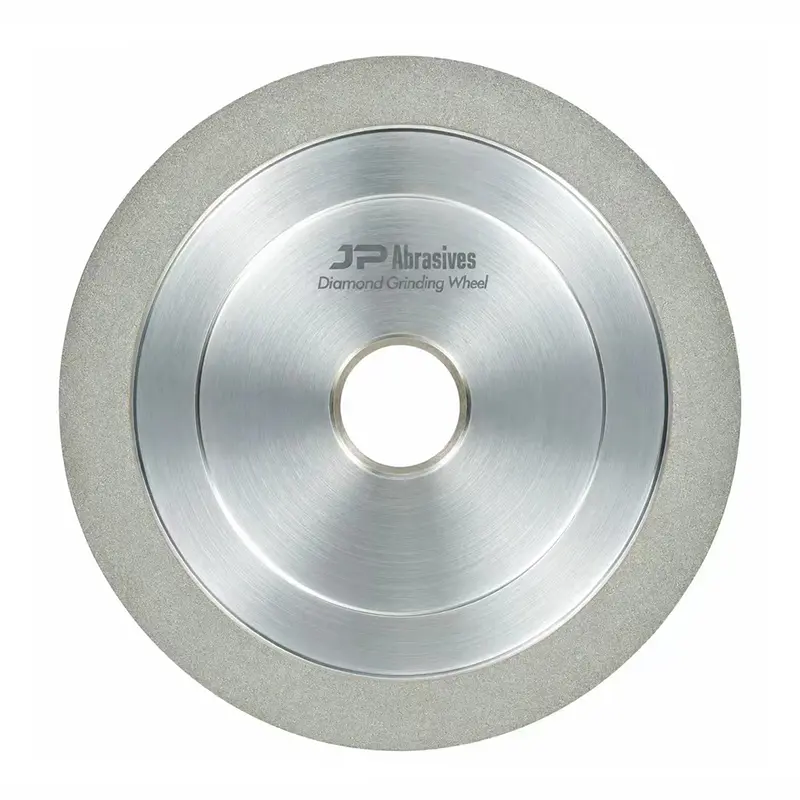
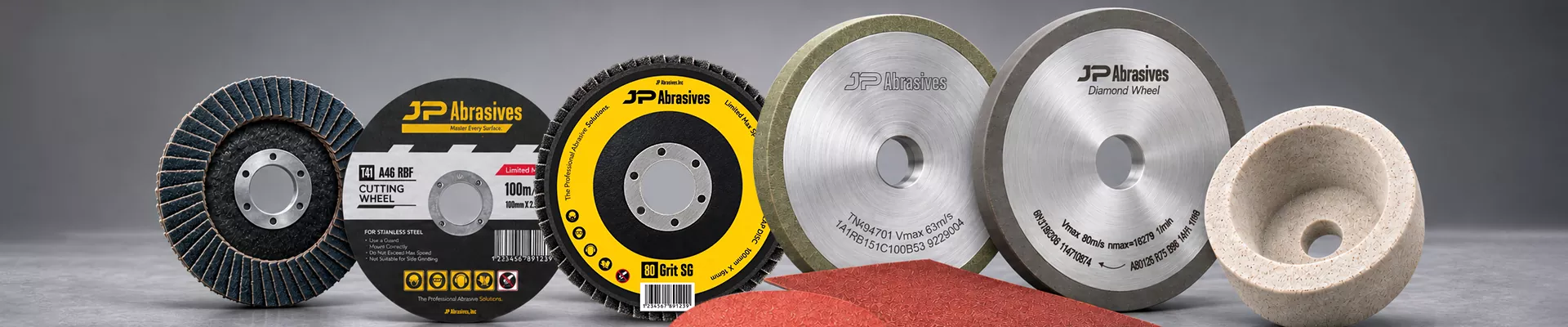
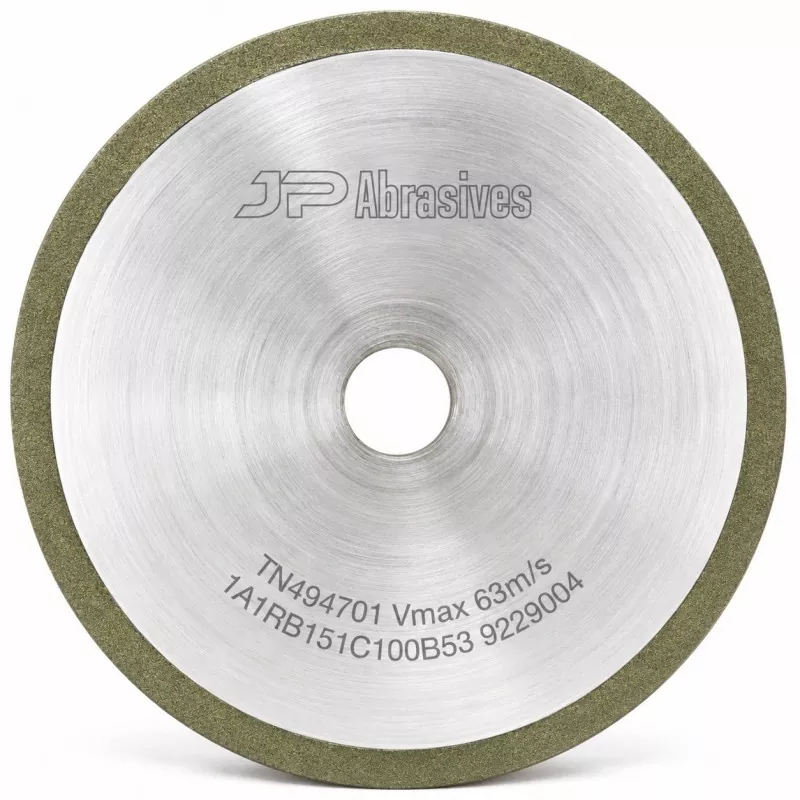
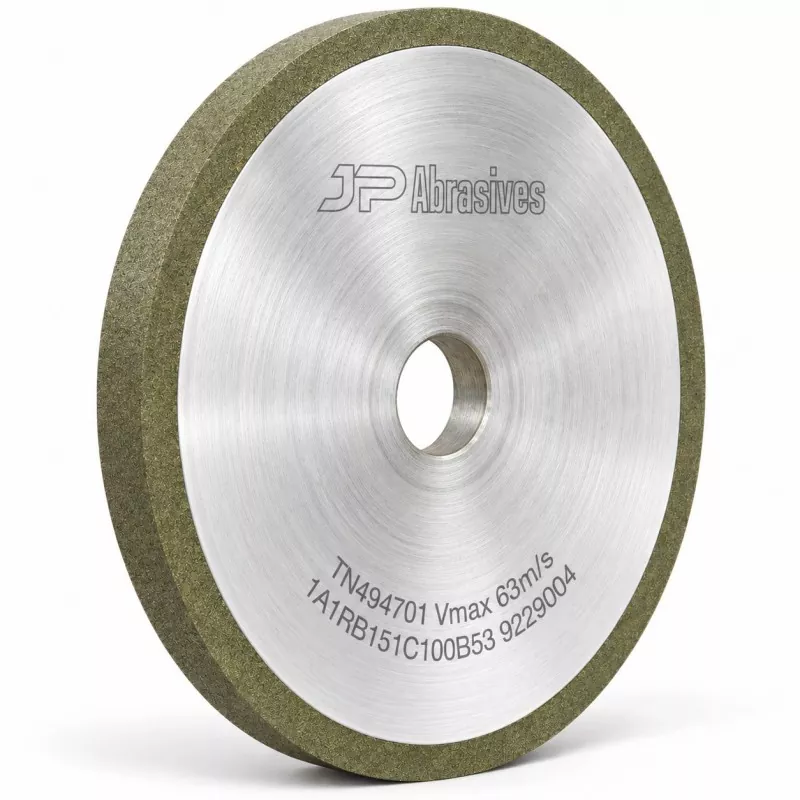
The D4 Diamond Grinding Wheel for Ceramics and Hard Materials supplied by JP Abrasives is suitable for precision grinding of ceramics and hard materials. It is an ultra-hard abrasive solution for technical ceramics, advanced ceramics, glass, quartz and other approved brittle hard materials. This series combines synthetic diamond abrasive with resin, metal, sintered and mixed bonding systems, and adopts grinding wheel geometries tailored for specific applications.
This high-quality D4 Diamond Grinding Wheel for Ceramics and Hard Materials was designed by JP Abrasives manufacturer specifically for the grinding of hard and brittle materials, with a focus on the processing quality of the finished products. Its main goal is to achieve dimensional stability, controllable surface condition, edge integrity and repeatable processing results. At the same time, by making reasonable choices of grinding wheels and processes, it minimizes the risks of chipping, surface damage and micro-cracks.
Core Positioning — Precision Grinding for Hard & Brittle Materials
D4 is an application-engineered product family for manufacturers that cannot treat ceramic, glass or quartz grinding as conventional metal grinding. These materials combine high hardness with brittle fracture behavior, making wheel specification, machine condition, coolant, dressing, workholding and grinding parameters part of the same process system.
The D4 portfolio is therefore organized around workpiece material, geometry, grinding method and required finished condition rather than a single standardized wheel shape. Customized shapes and bond systems support surface, OD, ID, centerless, profile and double-disc grinding applications where production requirements differ significantly.
Primary Materials & Grinding Conditions
Core Material Families
· Technical ceramics and advanced ceramics within the approved application range
· Alumina ceramic components
· Zirconia ceramic components
· Silicon carbide and other approved engineering ceramics
· Glass and precision glass components
· Quartz and quartz-based components
· Other verified hard and brittle non-ferrous materials requiring diamond grinding
Exact material compatibility must follow the final JP Abrasives wheel specification and application validation. Ceramic composition, porosity, hardness, fracture behavior and component geometry can materially change grinding performance.
Primary Grinding Processes
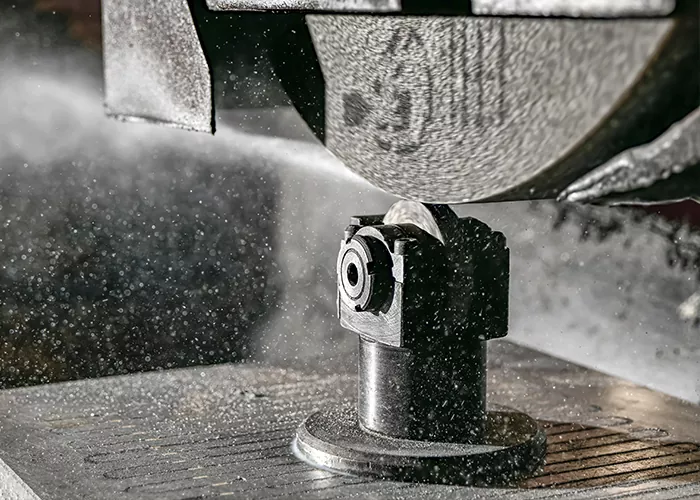
Surface Grinding — For flatness, thickness control and surface generation on ceramic, glass and other hard brittle components.
OD / Cylindrical Grinding — For outside-diameter control and cylindrical geometry on rods, sleeves, rollers and precision components.
ID Grinding — For bores and internal cylindrical features where Diamond Grinding Wheel for Ceramics and Hard Materials accessibility, stiffness and dimensional control are critical.
Centerless Grinding — For high-repeatability diameter processing of rods, tubes and cylindrical hard-material components.
Profile Grinding — For engineered contours, grooves, radii and geometry-sensitive features requiring controlled wheel form.
Double-Disc Grinding — For simultaneous or high-throughput processing of opposing faces where thickness consistency and parallelism are important process objectives.
Hard-Brittle Material Grinding Behavior
Grinding ceramics, glass and quartz requires management of both material removal and fracture behavior. Excessive mechanical or thermal loading can increase edge breakout, surface defects or subsurface damage. The wheel must therefore be selected to maintain effective diamond cutting action while controlling forces at the workpiece.
Finished quality depends on more than abrasive hardness. Diamond grit, concentration, bond, wheel structure, wheel geometry, dressing condition, depth of cut, feed, wheel speed, coolant delivery, workholding and machine rigidity all influence the result.
Bond Systems for Application Engineering
Resin Bond — Provides a versatile platform for controlled diamond grinding where cutting action, surface condition and practical wheel behavior must be balanced. Suitable applications depend on the approved wheel specification.
Metal Bond — Provides strong abrasive retention and durable wheel form for applications where wheel wear, form stability and hard-material processing requirements justify a more strongly retained abrasive system.
Vitrified Bond — Supports precision-oriented applications where controlled wheel structure, dressability and consistent grinding behavior are important. Final use must be matched to machine, material and process requirements.
Hybrid Bond — Combines selected performance characteristics to address demanding production cycles where cutting efficiency, form retention, surface condition and wheel life must be balanced.
No bond system should be presented as universally superior. D4 bond selection is based on material, contact geometry, stock removal, surface requirement, wheel shape, dressing practice, coolant, machine capability and production target.
Customized Wheel Shapes
D4 is intentionally not restricted to one wheel geometry. Hard-material components vary widely in diameter, thickness, bore, profile and accessible grinding surface. Customized straight, cup, dish, peripheral, internal and profile wheel configurations may be developed from the verified production range.
Custom geometry should be driven by the grinding interface: workpiece feature, contact area, required access, spindle/arbor arrangement, wheel speed and dressing method. Final website drawings and shape codes must be based on approved JP Abrasives production specifications.
Material-Specific Application Focus
Technical Ceramics — Precision grinding may target flatness, thickness, diameter, profile or surface condition. Chipping and subsurface damage should be evaluated under the actual ceramic composition and process.
Alumina / Zirconia — Common engineering ceramic families require wheel specifications matched to hardness, toughness, part geometry and required finish rather than a generic 'ceramic wheel' selection.
Glass — Grinding must account for brittle edges, surface defects and the sensitivity of thin or precision components to machine runout, workholding and coolant delivery.
Quartz — Diamond grinding specifications should be selected for the actual component geometry, removal requirement and surface target, with attention to edge integrity and process repeatability.
Complex Hard-Material Components — Customized wheel profiles and bond systems may be required where the component combines narrow features, internal surfaces, profiles or multiple grinding stages.
Search Intent
D4 search demand is material-led and application-engineering-led. Industrial buyers typically search for a diamond grinding wheel by the hard material being processed and the required grinding method, then qualify the supplier on surface quality, dimensional control, edge integrity and custom specification capability.
Primary SEO Search Cluster
diamond grinding wheel for ceramic · ceramic grinding diamond wheel · diamond wheel for technical ceramics · diamond wheel for advanced ceramics · diamond wheel for glass grinding · diamond wheel for quartz grinding · diamond wheel for hard brittle materials · precision diamond grinding wheel · custom diamond grinding wheel · diamond wheel for ceramic surface grinding · diamond wheel for ceramic centerless grinding
Buyer Search Intent
Source an application-specific diamond wheel for precision grinding of ceramic, glass, quartz or another hard brittle component, with bond, grit, concentration and wheel geometry selected for dimensional control, surface condition, edge integrity and production stability.
Core Buyer Value
Dimensional Stability — Application-matched wheel specifications support repeatable control of thickness, diameter, flatness and other defined component dimensions.
Surface Quality — Diamond grit, bond, dressing and process parameters are selected around the required finished surface rather than maximum material removal alone.
Reduced Chipping — Controlled grinding conditions help limit edge breakout and localized brittle fracture on ceramic, glass and quartz components.
Microcrack / Subsurface-Damage Awareness — D4 qualification considers damage below or near the finished surface as a process risk that must be evaluated for the actual material and application.
Form & Profile Control — Customized wheel geometry and appropriate bond systems support profile-sensitive and geometry-critical hard-material components.
Application Customization — Multiple bond systems and custom wheel shapes allow the product to be engineered around the customer's component, machine and production target.
Total Process Value — Wheel life, dressing, cycle time, finished-part quality, rework and reject cost are evaluated together rather than comparing wheel price alone.
Surface Quality & Subsurface Integrity
For hard brittle components, an acceptable visual surface does not automatically establish subsurface integrity. Where the application is sensitive to microcracking or subsurface damage, the customer should define the inspection method and acceptance criteria during qualification.
Specific surface roughness, flatness, dimensional tolerance, chipping limits or subsurface-damage values must not be published as universal product claims. They require a defined material, wheel specification, machine setup and validated grinding condition.
Technical Selection Parameters
1. Material Composition — Identify the exact ceramic, glass, quartz or other hard-material type, including grade or composition where available.
2. Component Geometry — Provide OD, ID, thickness, length, profile, edge features and areas to be ground.
3. Grinding Method — Define surface, OD, ID, centerless, profile, double-disc or another approved precision grinding process.
4. Stock Removal — State the amount of material to be removed per operation and whether the process is rough, semi-finish or finish grinding.
5. Surface & Dimensional Requirement — Define target roughness, flatness, thickness, diameter, parallelism, profile or other measurable acceptance criteria where applicable.
6. Edge / Damage Requirement — State allowable chipping, breakout or relevant subsurface-integrity requirements.
7. Wheel Geometry — Provide required or current wheel shape, dimensions, bore/interface and working-face geometry.
8. Diamond Grit & Concentration — Select according to removal, surface, edge condition and wheel-life requirements. Publish only approved JP specifications.
9. Bond System — Select resin, metal, vitrified or hybrid according to material, grinding interface, dressing, coolant and production target.
10. Machine / Speed / Rigidity — Provide machine make/model, spindle configuration, wheel speed and relevant rigidity or runout conditions.
11. Coolant & Dressing — Define coolant type/delivery and dressing method/frequency where applicable.
12. Production KPI — Provide cycle time, throughput, wheel life, dressing interval, reject rate and current process limitation.
Recommended Qualification Metrics
· Dimensional consistency: thickness / OD / ID / flatness as applicable
· Surface condition and specified roughness where required
· Edge chipping / breakout
· Profile accuracy for geometry-sensitive components
· Subsurface-damage or microcrack inspection where required by the application
· Material removal per cycle
· Cycle time and throughput
· Wheel wear and form retention
· Dressing frequency and dressing time
· Reject / rework rate
· Secondary finishing requirement
· Total grinding cost per accepted component
Cost per Accepted Precision Component
For ceramic, glass and quartz components, the commercial value of a grinding wheel is strongly affected by part yield and downstream processing. A lower wheel price can be offset by chipping, dimensional variation, additional lapping or polishing, frequent dressing, rework or rejected components.
A practical model is: Wheel Cost + Grinding Time + Dressing + Secondary Finishing + Material/Part Loss + Reject/Rework Risk = Total Grinding Process Cost. The preferred purchasing KPI is total grinding cost per accepted precision component.
D4 Position within JP Abrasives Diamond Range
| D1 — Diamond Grinding Wheels for Carbide | Tungsten carbide components; OD, surface, cylindrical and centerless grinding. Core value: Efficient Carbide Grinding. |
| D2 — Diamond Wheels for CNC Tool Grinding | Carbide cutting tools; fluting, gashing, relief, OD and end-face grinding. Core value: Complete Tool Grinding Solution. |
| D3 — Diamond Precision Cut-Off Wheels | Carbide, ceramic, glass and quartz; precision cut-off, thin cutting and slotting. Core value: Clean Precision Cutting. |
| D4 — Diamond Grinding Wheels for Ceramics & Hard Materials | Technical ceramics, glass, quartz and other hard brittle materials; precision grinding and custom applications. Core value: Precision & Surface Quality. |
Application Engineering & Custom Development
D4 projects should begin with the component and grinding requirement rather than a generic wheel code. JP Abrasives can structure qualification around material, component geometry, machine, current wheel, target dimensions, surface requirement, edge condition, cycle time and production volume.
Recommended workflow: Application Review → Material & Process Definition → Wheel/Bond/Shape Selection → Sample Trial → Dimensional & Surface Inspection → Process Adjustment → Production Trial → Approved Specification.
Wholesale, OEM & Private Label
JP Abrasives supports qualified sourcing programs for ceramic manufacturers, precision glass processors, quartz component manufacturers, advanced-material machining companies, industrial distributors and specialized superabrasive channels.
OEM and Private Label programs may include approved custom wheel geometries, bond systems, product naming, technical labels, packaging, barcodes, master cartons and SKU planning. Technical performance claims must remain tied to verified production specifications and application testing.
RFQ Information for Industrial Buyers
· Exact workpiece material / composition / grade
· Component drawing or key dimensions
· Grinding process: surface / OD / ID / centerless / profile / double-disc
· Stock removal per operation
· Target surface roughness / surface condition
· Dimensional tolerance / flatness / parallelism / profile requirement
· Allowable edge chipping or damage requirement
· Current wheel shape, size and specification
· Machine brand/model and spindle/interface
· RPM / wheel speed
· Coolant type and delivery
· Dressing method and frequency
· Current cycle time / throughput
· Current wheel life and form-retention issue
· Current process problem: chipping, finish, microcracking, dimensional drift, wheel wear, dressing or productivity
· Monthly / annual consumption
· JP Abrasives brand / OEM / Private Label requirement
Safety & Technical Data
Superabrasive grinding wheels must be selected, mounted, dressed and operated according to the approved wheel specification, machine requirements and applicable safety instructions. Maximum operating speed must never be exceeded.
Final website technical tables must publish exact dimensions, bore/interface, wheel geometry, bond, grit, concentration, maximum operating speed, coolant requirements, dressing instructions and machine compatibility only after the corresponding JP Abrasives SKU has been verified.
Frequently Asked Questions
What materials are D4 Diamond Grinding Wheels designed for?
D4 is positioned for technical ceramics, advanced ceramics, glass, quartz and other approved hard brittle materials requiring precision grinding.
What is the difference between D4 and D1?
D1 is centered on tungsten carbide component grinding. D4 is centered on ceramics, glass, quartz and other hard brittle materials, with greater emphasis on surface condition, edge integrity and application-specific wheel design.
What is the difference between D4 and D3?
D3 is a precision cut-off and slotting series based primarily on 1A1R cutting wheels. D4 is a grinding series for generating or finishing surfaces, diameters, bores and profiles.
Why does D4 include several bond systems?
Hard brittle materials and grinding methods vary significantly. Resin, metal, vitrified and hybrid bonds provide different process characteristics and are selected according to the actual material, geometry, machine, dressing and production target.
Can customized wheel shapes be supplied?
D4 is structured to support customized wheel geometries from the verified manufacturing range when the component or grinding interface requires a non-standard shape.
Can D4 guarantee a specific surface roughness or chipping level?
No universal value should be stated without validation. Surface finish, dimensional accuracy and chipping depend on the complete wheel specification, material, machine and grinding process.
What information is required for a quotation?
Provide material, component geometry, grinding method, stock removal, dimensional and surface targets, edge-quality requirement, wheel specification, machine, speed, coolant, dressing and production volume.
Request an Application Review / Request a Quote
For hard & brittle material grinding, submit: Material/Grade + Component Drawing/Dimensions + Grinding Method + Stock Removal + Surface Requirement + Dimensional Requirement + Edge/Chipping Requirement + Current Wheel + Machine/Spindle + RPM + Coolant + Dressing + Cycle Time + Wheel Life + Quantity + JP Brand/OEM.
JP Abrasives — Professional Abrasive Solutions. Master Every Surface.
Send Inquiry
Contact Info
-
Address
China:No.263,Central Street,Dadian Town,Junan County,Linyi City,Shandong Province,China
-
Tel
-
Email