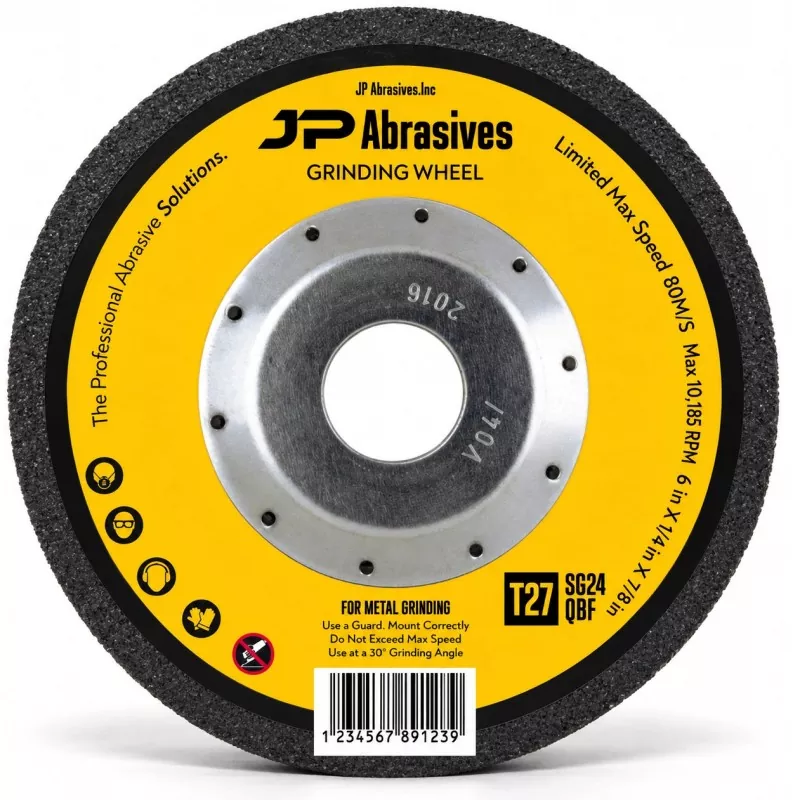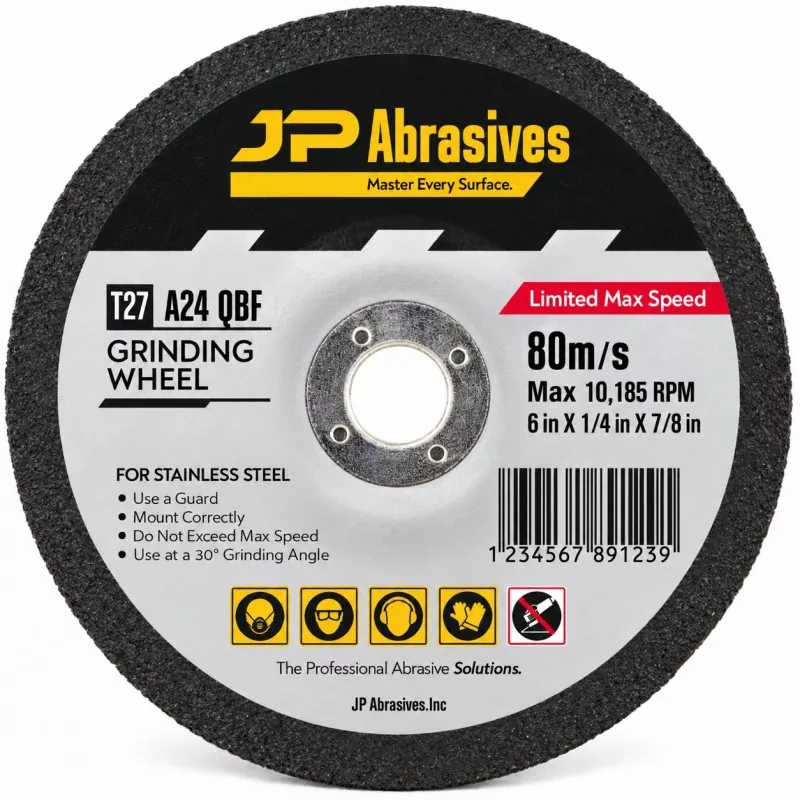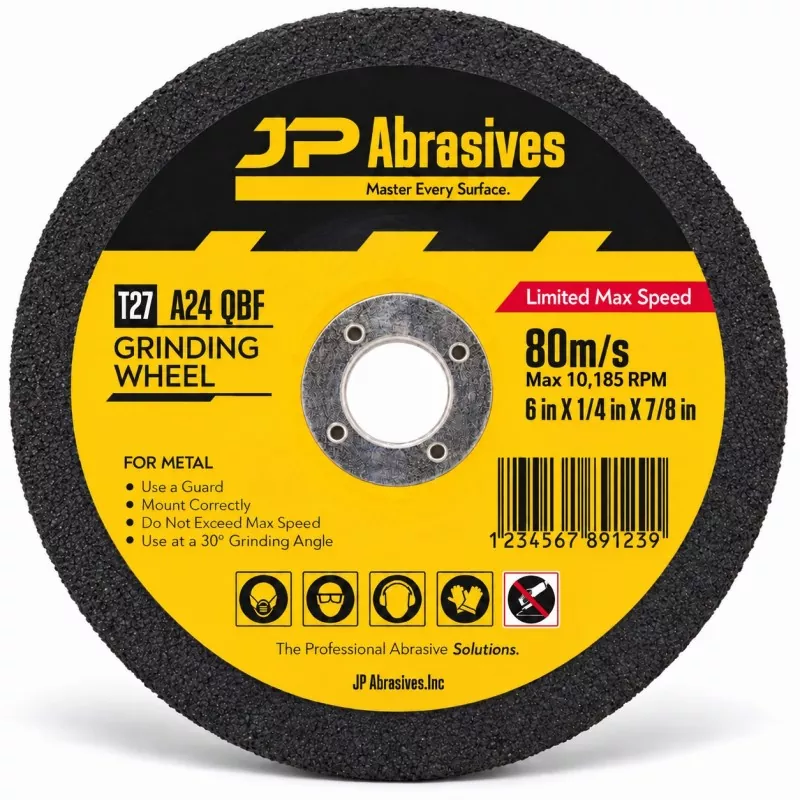
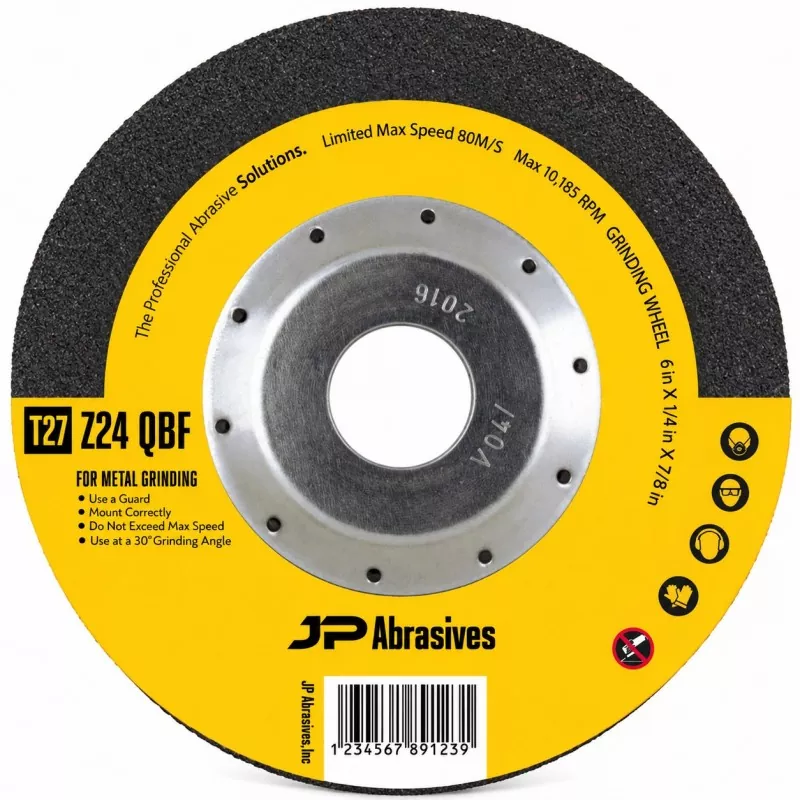
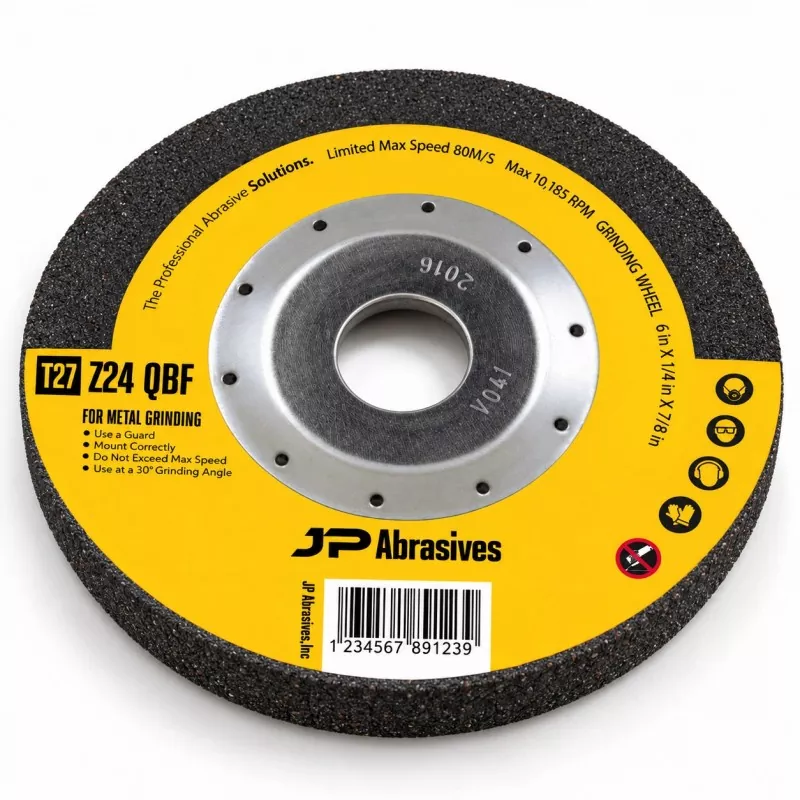
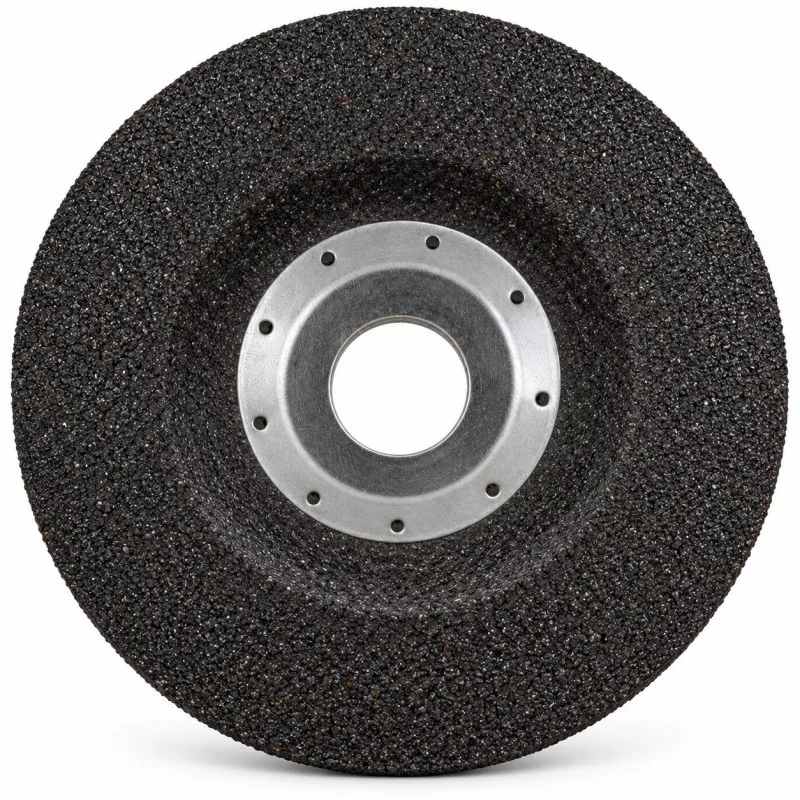
Heavy-Duty Grinding Wheel
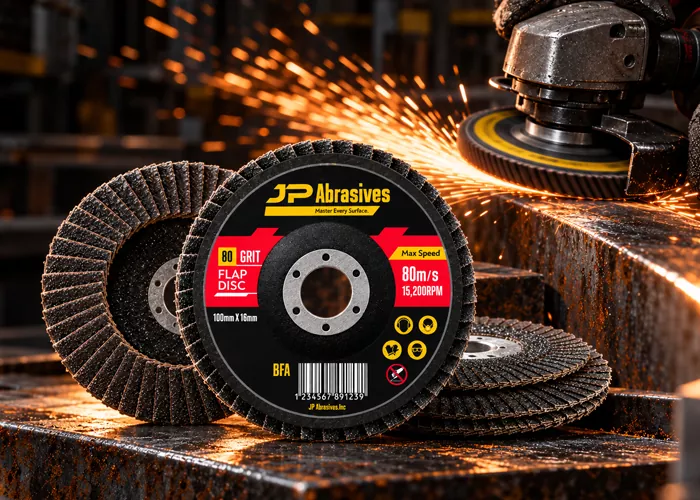
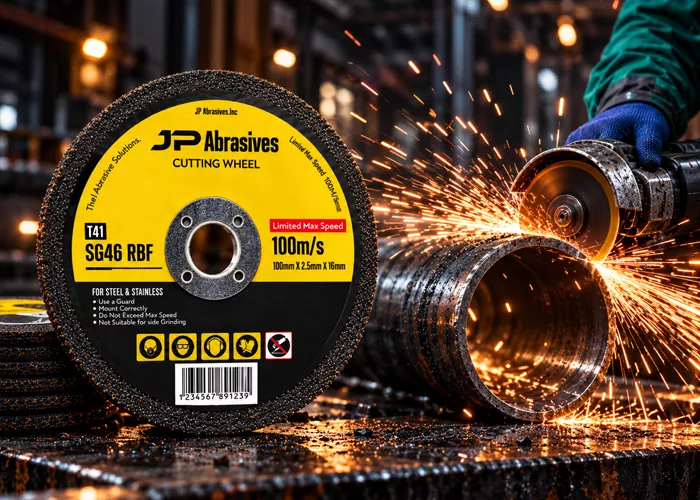
JP Abrasives Z-Series Heavy-Duty Grinding Wheel is a PREMIUM industrial abrasive solution for heavy weld grinding, cast-steel components and high-volume stock removal. For buyers sourcing a Weld Grinding Wheel, Stock Removal Grinding Wheel, Grinding Wheel for Cast Steel, bulk industrial grinding discs or OEM Heavy Grinding Disc programs, the range is centered on Aggressive Stock Removal + Productivity.
The Heavy-Duty Grinding Wheel manufactured by JP Abrasives is a high-end abrasive solution designed for heavy-duty grinding operations. It is equipped with zirconia-alumina and high-quality alumina composite abrasive systems, and features a stable structure formed by reinforced fiber mesh and high-strength resin binder.
Key features
It is distinctly different from conventional universal carbon steel grinding wheels. It is not aimed at general-purpose applications across various scenarios. Its core focus is on continuous large removal of metal, and it is suitable for high-strength grinding of cast steel and heavy welding components.
Built for High-Volume Material Removal
Heavy grinding applications are defined by the amount of metal that must be removed and the time available to remove it. Thick weld reinforcement, cast-steel gates and riser remnants, rough edges, fabrication excess and heavy surface irregularities can consume substantial operator time when the abrasive is not matched to the workload.
The Z-Series Heavy-Duty Grinding Wheel is designed for these demanding operations. Its role is different from a general-purpose steel wheel: the purchasing objective shifts from broad everyday versatility to material removal rate, sustained grinding action and production output.
For industrial users, the relevant question is not simply whether the wheel can grind the workpiece. The question is how much qualified material can be removed per unit of time and at what total process cost.
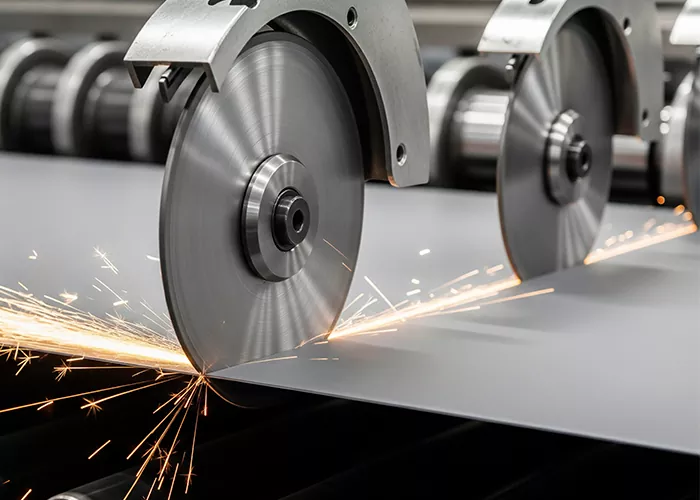
Heavy Weld Grinding
Heavy weld grinding is a primary application for this product family. Structural fabrication, heavy machinery, large welded assemblies and repair operations can produce weld reinforcement that must be reduced before inspection, assembly, coating or subsequent finishing.
In these applications, grinding time can become a direct production constraint. A Z-Series Heavy-Duty Grinding Wheel should therefore be evaluated by how efficiently it reduces the required weld volume while maintaining useful wheel life and predictable operation.
For light or routine carbon-steel weld cleanup, the A-Series General Purpose Grinding Wheel may provide the more appropriate STANDARD solution. Heavy-Duty is intended for workloads where aggressive removal and productivity justify a PREMIUM product tier.
Stock Removal on Fabricated Steel
Large fabricated components often require more than routine weld cleanup. High spots, excess edge material, heavy tack welds, fit-up corrections and localized fabrication excess can require sustained grinding.
A Stock Removal Grinding Wheel is intended to shorten this material-reduction stage. The purchasing focus is the relationship between removal rate, wheel consumption, operator time and finished-part cost.
For routine steel cleanup, use A-Series; for professional stainless-steel processing, use INOX. For sustained high-load production removal, compare Z-Series with C-Series Ceramic Alumina Grinding Wheel on the actual task.
Material Removal Rate as a Primary KPI
For heavy grinding, Material Removal Rate is one of the most useful qualification metrics. A controlled test can record the amount of material removed during a defined grinding interval under standardized conditions.
Depending on the customer's test method, performance can be expressed as material removed per minute, total material removed per wheel, or grinding time required to reach a defined target.
Use a consistent material, removal target and measurement method so production teams can compare grinding productivity across candidate wheels.
Grinding Productivity
When operators spend hours each shift on heavy grinding, small changes in removal rate can accumulate into meaningful production differences. Faster completion of a defined grinding task can increase parts per shift, reduce operator hours per component and free equipment for subsequent work.
Productivity must still be evaluated together with wheel consumption. A wheel that cuts aggressively but is consumed too quickly may not deliver the best economic result. The useful measure is the balance between removal rate, usable wheel life and total grinding time.
Core Product Advantages
Aggressive Stock Removal
Designed for applications where significant metal volume must be removed efficiently from welds, cast-steel components and fabricated components.
Heavy Weld Capability
Positioned for large weld reinforcement and demanding welded structures where routine grinding products may require excessive time.
Cast-Steel and Steel Foundry Applications
Addresses gates, riser remnants, flash and localized excess metal on suitable cast-steel components.
Sustained Grinding
Built around demanding workloads where the abrasive must continue cutting through extended material-removal tasks.
Productivity Focus
Evaluated through removal rate, grinding time, wheel consumption and output rather than purchase price alone.
Premium Industrial Positioning
Provides distributors and industrial users with a dedicated PREMIUM tier for heavy grinding and stock-removal applications.
Typical Applications
· Heavy weld removal
· Large weld reinforcement reduction
· Casting gate and riser cleanup
· Steel foundry grinding
· Parting-line and flash removal
· High-volume stock removal
· Heavy edge grinding
· Fabrication correction
· Large steel structure grinding
· Heavy equipment component grinding
Target Industrial Markets
· Steel foundries
· Heavy metal fabrication
· Structural steel manufacturing
· Shipbuilding and marine fabrication
· Construction equipment
· Mining equipment
· Agricultural machinery
· Industrial machinery
· Energy equipment
· Heavy repair and maintenance
Five Industrial Qualification KPIs
1. Material Removed per Minute
Measure the quantity of material removed during a standardized grinding interval. This is a direct indicator of stock-removal productivity.
2. Total Material Removed per Wheel
Record the total amount of material removed over the wheel's useful working life under defined conditions.
3. Grinding Time per Part
Measure the time required to complete the specified weld reduction, cast-steel cleanup or stock-removal task.
4. Wheel Changes per Shift
Track replacement frequency and the production interruption associated with wheel changes.
5. Cost per Finished Part
Combine abrasive consumption, operator time and grinding duration to evaluate the economic result of the complete operation.
Total Grinding Cost
Heavy-duty abrasive purchasing should be based on production economics. A lower wheel price does not necessarily reduce cost if the operation requires longer grinding time, more wheels or additional operator hours.
Cost per Finished Part = (Consumed Wheel Cost + Grinding Labor and Machine Cost + Wheel-Change Cost + Secondary Cleanup Cost) / Number of Accepted Parts. Convert process time to cost using the applicable rates and avoid counting the same labor or downtime twice.
For standardized production, buyers can also calculate Cost per Kilogram of Material Removed, Cost per Weld Completed or Cost per Finished Casting where those measures fit the operation.
Controlled Productivity Test
A meaningful product comparison should use the same material, workpiece geometry, machine, operator method, pressure range and removal target. The test should record grinding time, wheel consumption and material removed.
Recommended qualification sequence: Application Review → Sample Selection → Controlled Removal Test → Production Trial → Cost Comparison → Bulk Order.
This process is particularly important for foundry and heavy-fabrication applications because workpiece geometry and operator technique can materially affect results.
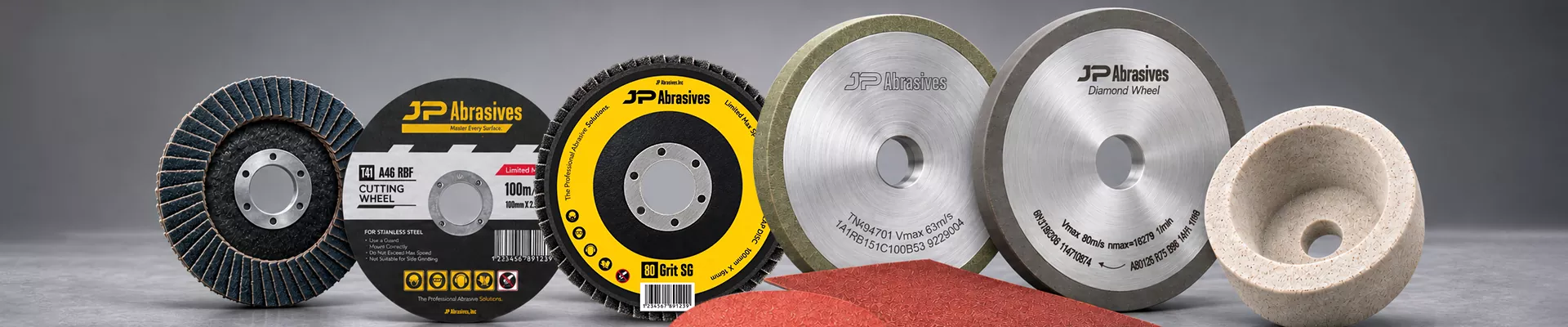
Product Position within the JP Abrasives Grinding Wheel Range
| A-Series General Purpose Grinding Wheel - STANDARD | Carbon steel, mild steel, weld cleanup and everyday metal grinding. Core value: Versatile + Cost-Effective Grinding. |
| INOX Grinding Wheel - PROFESSIONAL | Stainless steel and stainless weld processing. Core value: Professional Stainless Steel Grinding. |
| Z-Series Heavy-Duty Grinding Wheel - PREMIUM | Zirconia / Premium Alumina. Heavy steel welds, suitable cast-steel cleanup and high stock removal. Aggressive Stock Removal + Productivity. |
| C-Series Ceramic Alumina Grinding Wheel - PREMIUM+ | Ceramic Alumina. Sustained high-load production grinding and heavy material removal. Material Removal Rate + Production Productivity. |
When to Select Heavy-Duty
Select the Z-Series Heavy-Duty Grinding Wheel when the operation involves heavy welds, cast-steel components, large fabrication excess or other tasks where substantial material must be removed and grinding time affects production.
Choose A-Series General Purpose Grinding Wheel for routine carbon-steel grinding and weld cleanup, and INOX Grinding Wheel for professional stainless-steel processing. C-Series Ceramic Alumina Grinding Wheel is a PREMIUM+ option for sustained high-load production grinding and heavy material removal. Choose Z or C by removal rate, useful wheel life, workpiece condition and cost per finished part.
OEM Heavy Grinding Disc / Private Label
Qualified OEM Heavy Grinding Disc and Private Label Grinding Wheel programs can be developed around a customer's PREMIUM / HEAVY-DUTY product tier. Project scope may include center-label design, product naming, packaging, barcodes, master cartons, approved wheel sizes and market-specific SKU planning.
OEM and private-label programs can organize the Z-Series around heavy weld grinding, cast-steel cleanup and stock-removal applications, with product labels and packaging matched to the selected wheel specifications.
RFQ Information for Industrial Buyers
· Workpiece material and grade
· Application: heavy weld, cast-steel cleanup, foundry grinding or stock removal
· Workpiece geometry and dimensions
· Estimated material-removal volume or target
· Weld size or cast-steel excess
· Required wheel dimensions and arbor
· Machine type, power and RPM
· Current grinding time per part
· Current wheel or benchmark product
· Current wheel consumption
· Monthly or annual volume
· Target productivity or cost objective
· Packaging and barcode requirements
· JP Abrasives brand, OEM or private-label requirement
Safety and Operating Requirements
Heavy-duty grinding wheels must be selected, mounted and operated according to the approved product specification, machine requirements and applicable safety instructions. Maximum operating speed must never be exceeded.
Operators should use appropriate PPE and machine guarding and inspect the wheel and equipment before use. Excessive side loading, incorrect mounting or operation outside the approved application can create safety risks.
Follow the operating instructions and speed rating shown on the wheel and its packaging.
Problem-solving
1. Our White Aluminum Oxide Grinding Wheel addresses the pain points of low efficiency and long processing time for thick weld seams, cast steel risers, and parting line burrs. Ordinary grinding wheels are ineffective in cutting, and operators need to repeatedly grind, which reduces the production line's cycle time; the Z series has strong continuous cutting ability, shortening the single-piece grinding cycle.
2. It improves the problem of rapid abrasive wear and frequent wheel replacement causing machine downtime during heavy-load grinding, reducing production line interruptions caused by frequent wheel replacements and saving labor costs.
3. It avoids the risk of loose abrasive, uneven grinding, and insufficient rigidity of general grinding wheels under continuous heavy pressure, and the multi-layer reinforced structure enhances the stability of the grinding wheel operation, reducing safety hazards in heavy-duty scenarios.
4. It helps customers break away from the selection误区of only considering the purchase price of individual items, comprehensively calculating material loss, labor time, and scrap costs, optimizing the total cost of single-piece processing, and meeting the batch stable production needs of foundries and heavy-duty maintenance.
5. It distinguishes different steel conditions to avoid selecting the wrong grinding wheel: A series is used for daily cleaning of ordinary carbon steel, Z series for heavy-load removal, INOX series for stainless steel processing, preventing incorrect material selection from causing processing defects.
Frequently Asked Questions
What is the Z-Series Heavy-Duty Grinding Wheel used for?
Heavy steel weld removal, suitable cast-steel cleanup and high-volume steel stock removal where grinding time affects production output.
How is Z-Series different from A-Series General Purpose?
A-Series is STANDARD for economical everyday steel grinding. Z-Series is PREMIUM, using a Zirconia / Premium Alumina abrasive system for heavy welds and higher-volume material removal.
Is it suitable for all castings?
The casting application is carbon-steel and suitable low-alloy cast-steel cleanup. Cast iron, nonferrous castings and hardened alloy castings require material-specific selection. Stainless cast steel also requires a wheel that meets the process contamination limits.
What is the most important performance metric?
Material Removal Rate is a primary KPI, but it should be evaluated together with total material removed per wheel, grinding time and cost per finished part.
Does a more aggressive wheel always reduce total cost?
Not necessarily. The economic result depends on removal rate, wheel consumption, labor, downtime, machine conditions and the specific workpiece.
Is OEM / private label available?
Qualified programs can be developed according to approved specifications, volume, branding, packaging and market requirements.
Request a Stock-Removal Test / Request a Quote
For heavy welds, cast-steel components and high-volume material removal, submit: Material + Application + Workpiece Geometry + Removal Target + Wheel Size + Machine/RPM + Current Grinding Time + Current Wheel + Quantity + Productivity Target + JP Brand/OEM.
JP Abrasives - Professional Abrasive Solutions. Master Every Surface.
Send Inquiry
Contact Info
-
Address
China:No.263,Central Street,Dadian Town,Junan County,Linyi City,Shandong Province,China
-
Tel
-
Email