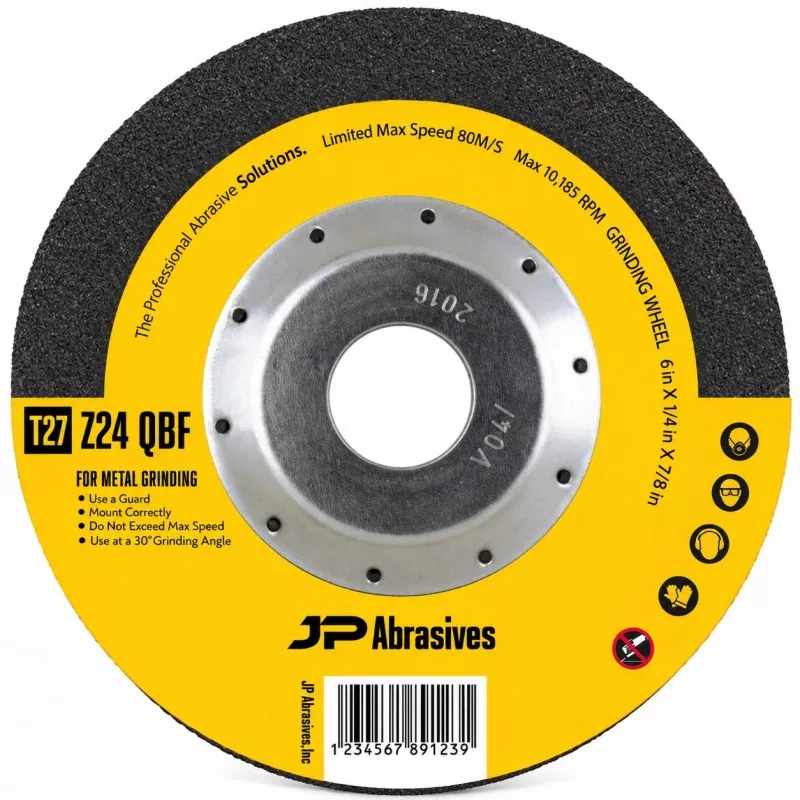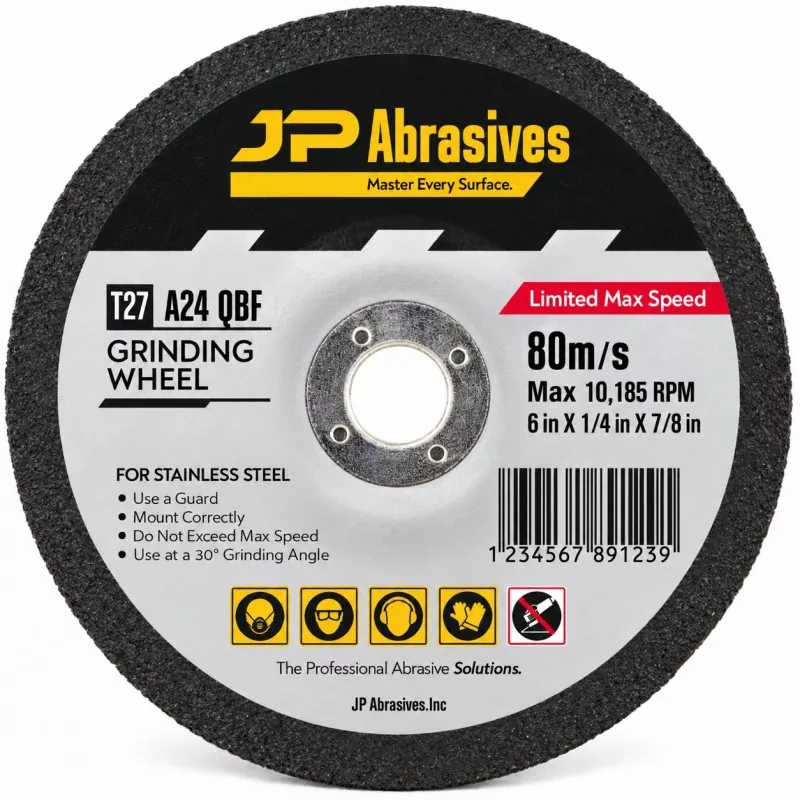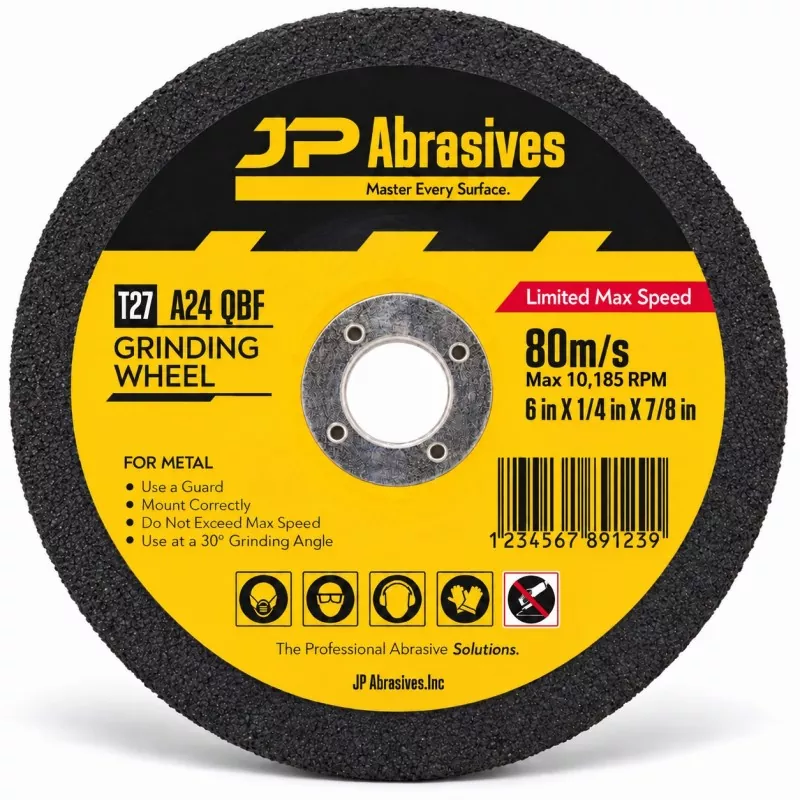
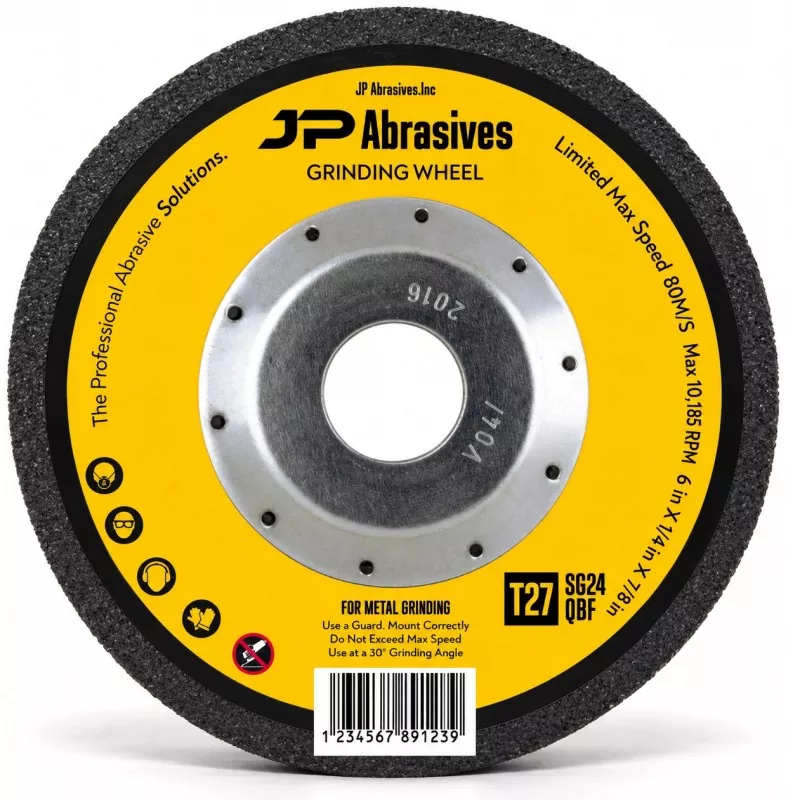
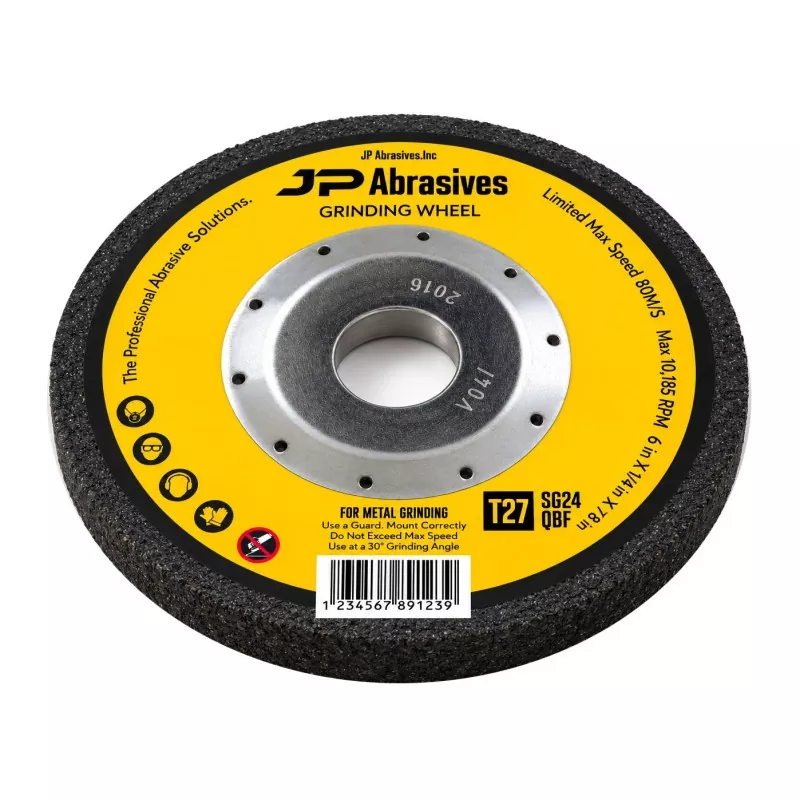
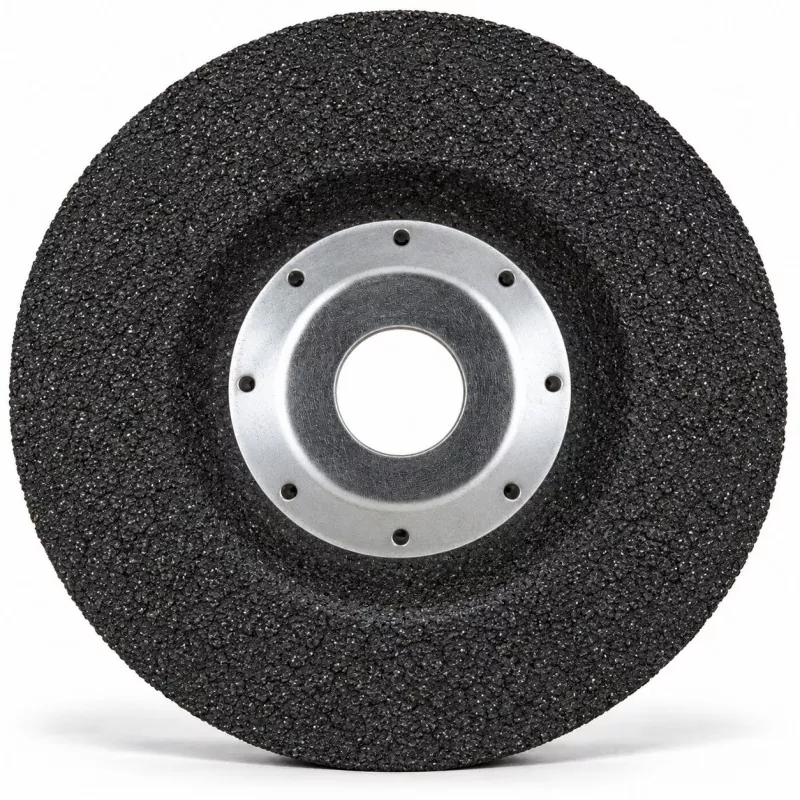
Ceramic Alumina Grinding Wheel
The Ceramic Alumina Grinding Wheel supplied by JP Abrasives factory is a PREMIUM+ grinding solution for demanding metals, heavy weld removal and production environments where material removal rate directly affects throughput. Built around Ceramic Alumina, the C-Series is designed for buyers evaluating heavy grinding by output, wheel utilization and total grinding cost rather than purchase price alone.
For industrial purchasing teams seeking ceramic grinding wheels, alumina ceramic grinding wheels, or high-performance grinding wheel solutions, this Ceramic Alumina Grinding Wheel, manufactured by JP Abrasives Factory, is designed around a single key performance objective: the maximum material removal rate per minute.
Maximum Material Removal per Minute
The defining requirement for the C-Series is productive material removal. In heavy fabrication, a grinding operation can become a bottleneck when operators spend excessive time reducing weld reinforcement, preparing edges or removing fabrication excess. The commercial value of a premium ceramic wheel is created when the grinding process completes the required removal in less productive time while maintaining useful wheel performance.
Material Removed per Minute should therefore be the first qualification KPI. It converts abrasive performance into a production metric that can be measured on the customer's actual workpiece, machine and grinding method.
This positioning is intentionally different from a general-purpose wheel, where broad usability and cost efficiency are primary, and from an INOX wheel, where stainless-specific fabrication is the central application.
Ceramic Alumina Cutting Action
Ceramic Alumina abrasive systems are designed around sustained cutting action under demanding grinding loads. Under appropriate conditions, controlled grain fracture can expose renewed cutting edges as grinding continues, helping the abrasive remain active through high-pressure material-removal operations.
The performance of a Ceramic Alumina Grinding Wheel is determined by the complete wheel system, not abrasive name alone. Grain formulation, bond, reinforcement, wheel hardness, structure, dimensions, machine power, operating speed, contact angle, pressure and workpiece properties all influence the result.
Choose the wheel size and construction to match the machine, material and removal target. Ceramic Alumina, the bond and reinforcement work together to support productive grinding.
Heavy Weld Grinding
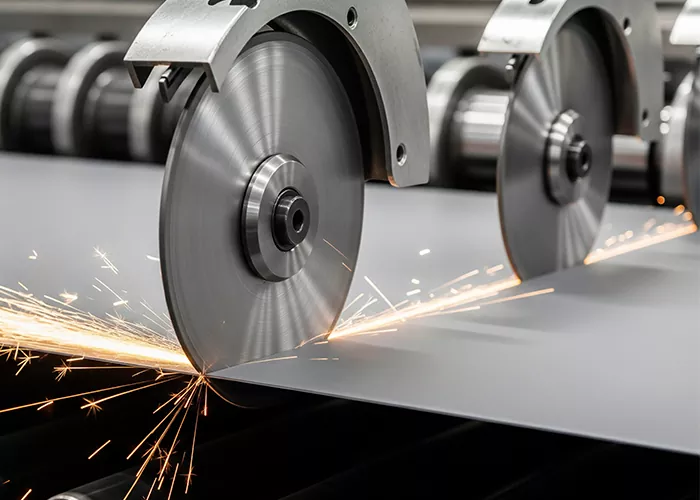
Heavy Weld Grinding is a primary C-Series application. Large weld reinforcement on structural assemblies, machinery, tanks, fabricated frames and heavy equipment can require substantial grinding before inspection, fitting, coating or final finishing.
In this environment, the wheel should be evaluated by the time required to reduce the weld to the specified condition, the amount of abrasive consumed and the number of completed welds per wheel.
A Ceramic Grinding Wheel becomes commercially relevant when repeated weld-removal work makes operator time and grinding throughput significant cost drivers.
Stock Removal
Stock Removal includes the removal of excess metal beyond routine weld cleanup: fabrication high spots, heavy tack welds, excess edge material, localized correction and other unwanted metal that must be reduced before the component moves forward.
For these operations, aggressive initial feel is not enough. The wheel must continue removing material as the task progresses. Buyers should compare Material Removed per Minute together with Total Material Removed per Wheel.
The resulting metric is a more useful indicator of industrial value than wheel price or initial cutting sensation.
Beveling and Weld Preparation
Beveling is an important application in pipe, plate and structural fabrication. Edges may require controlled material removal before welding to create the specified joint geometry or after fabrication to correct and prepare the component.
C-Series is positioned for high-output beveling where material removal volume and operator time justify a premium abrasive. The wheel should be selected according to base material, edge geometry, machine, angle and target preparation.
Where a precise bevel dimension is specified, the complete process must be validated; the abrasive wheel alone does not guarantee joint geometry.
Edge Grinding
Heavy edge grinding occurs on plate, structural sections, fabricated components and machinery parts where sharp edges, excess material or local irregularities must be removed.
Ceramic technology is most valuable when edge grinding is repetitive or high-load. The process should be assessed by grinding time, wheel wear, material removed and downstream work required.
Light deburring or cosmetic edge finishing should not be the primary positioning of the C-Series.
High-Pressure Grinding
The C-Series is intended for demanding applications where the machine, wheel specification and operator method support productive grinding loads. Under suitable conditions, ceramic abrasive technology can be used to maintain active cutting in operations where lower-performance products may slow as the task continues.
High pressure should never be interpreted as uncontrolled force. Correct pressure depends on wheel design, machine power, operating speed, contact area and workpiece. Excessive force can reduce control, increase heat and create safety risks.
Product testing should establish an effective operating window rather than instructing operators to apply maximum pressure.
Production Grinding
Production Grinding treats the wheel as part of manufacturing capacity. When a plant grinds the same weld, edge or component repeatedly, abrasive performance influences labor hours, parts per shift, wheel-change downtime and machine availability.
For these customers, the C-Series should be qualified in a production trial rather than by a short demonstration. A controlled trial can compare total grinding time, material removed, wheel consumption and output across a complete shift or representative batch.
The objective is not simply a faster wheel. It is a more productive grinding process.
Primary Materials
Stainless Steel
C-Series supports high-load stainless grinding, heavy weld removal and production stock removal when the selected wheel matches the stainless grade and process. For contamination-sensitive fabrication, choose a wheel whose specification meets the required Fe/S/Cl limits.
Carbon Steel
Heavy fabrication and production grinding on carbon steel can benefit when removal rate and labor productivity justify a premium ceramic solution.
High-Strength Steel
Select for the steel grade, hardness, workpiece geometry and grinding conditions; compare grinding time, removal rate and wheel consumption on the actual task.
Selected Alloy Steel and Tough Metals
Select alloy-steel and tough-metal applications by material grade, hardness and required removal. Different alloys and hardened materials require application-specific wheel selection.
Core Buyer Value
Fast Grinding
Reduces productive grinding time when the wheel and application are correctly matched.
High Material Removal
Centers product qualification on measurable metal removal rather than subjective aggressiveness.
Long Grinding Performance
Targets sustained useful cutting action through demanding material-removal cycles.
Maximum Productivity
Connects abrasive performance to operator output, machine utilization and parts completed per shift.
Fewer Production Interruptions
Where validated, improved wheel utilization can reduce changeover frequency and associated downtime.
Premium Process Economics
Evaluates the wheel through total grinding cost and cost per finished component rather than unit price alone.
Five Production KPIs
1. Material Removed per Minute
Primary C-Series KPI. Measure workpiece weight or another controlled removal indicator before and after a defined grinding interval.
2. Total Material Removed per Wheel
Measures the useful removal capacity delivered over the wheel's working life.
3. Grinding Time per Part
Tracks the productive time required to reach the specified weld, edge or stock-removal condition.
4. Wheel Changes per Shift
Measures abrasive replacement frequency and production interruption.
5. Cost per Finished Part
Combines abrasive consumption, labor time and changeover cost into a commercial purchasing metric.
Grinding Ratio and Productivity Balance
A wheel that removes material quickly but is consumed excessively may not produce the lowest process cost. Likewise, a wheel with long physical life may not be productive if cutting action declines and operators spend more time on each part.
Industrial qualification should therefore consider removal rate and wheel utilization together. Where the customer has suitable measurement capability, total material removed divided by abrasive consumed can provide an additional comparison of grinding efficiency.
The final purchasing decision should be based on the balance of removal rate, useful wheel life and total process time.
Total Grinding Cost
The C-Series Ceramic Alumina Grinding Wheel is designed for applications where labor and production time can exceed the abrasive purchase price. A practical economic model is:
Wheel Cost + Grinding Time + Operator Labor + Wheel Change Downtime + Secondary Processing = Total Grinding Cost.
For repetitive production, the preferred commercial output is Cost per Finished Part. This makes it possible to compare a premium ceramic wheel against lower-cost alternatives on the basis of manufacturing economics.
Typical Applications
· Heavy weld reinforcement removal
· Production weld grinding
· High-volume stock removal
· Plate and pipe beveling
· Weld-joint preparation
· Heavy edge grinding
· Fabrication correction
· Structural steel grinding
· Stainless production grinding
· High-strength steel grinding
· Heavy equipment and machinery fabrication
· Repetitive industrial material removal
Target Industrial Markets
· Heavy metal fabrication
· Structural steel manufacturing
· Stainless steel fabrication
· Shipbuilding and marine fabrication
· Pipe and pressure-equipment fabrication
· Automotive and transportation manufacturing
· Construction and agricultural equipment
· Industrial machinery
· Energy equipment
· Professional welding and abrasive distribution
Where C-Series Should Not Be Positioned
C-Series should not be positioned primarily for low-cost occasional grinding, light maintenance or general workshop use. A-Series General Purpose Grinding Wheel is the appropriate STANDARD category for those requirements.
It should not replace INOX when the buyer's central need is professional stainless fabrication and stainless-specific grinding rather than maximum production removal.
It should not be presented as a fine finishing or precision surface-grinding wheel. The C-Series described here is a high-performance resin-bonded industrial grinding product for material removal; precision machine grinding belongs to a different product architecture.
Position within the JP Abrasives Grinding Wheel Range
| A-Series General Purpose Grinding Wheel - STANDARD | Everyday carbon-steel grinding and weld cleanup. Core value: Versatile + Cost-Effective Grinding. |
| INOX Grinding Wheel - PROFESSIONAL | Professional stainless fabrication and weld processing. Core value: Professional Stainless Steel Grinding. |
| Z-Series Heavy-Duty Grinding Wheel - PREMIUM | Zirconia / Premium Alumina. Heavy steel welds, suitable cast-steel cleanup and high stock removal. Aggressive Stock Removal + Productivity. |
| C-Series Ceramic Alumina Grinding Wheel - PREMIUM+ | Demanding metals, high-pressure and repetitive production grinding using Ceramic Alumina. Core value: Maximum Material Removal per Minute. |
C-Series vs. Z-Series Heavy-Duty Grinding Wheel
Z-Series Heavy-Duty Grinding Wheel is PREMIUM and uses Zirconia / Premium Alumina for heavy steel welds, suitable cast-steel cleanup and high stock removal. Its value is productive material removal with useful wheel life.
C-Series Ceramic Alumina Grinding Wheel is PREMIUM+ and uses Ceramic Alumina for sustained high-load production grinding. Repeated heavy weld removal, beveling and stock-removal tasks make material removed per minute, grinding time and cost per finished part important selection criteria.
Compare Z and C on the same material, machine, contact load and removal target. Record removal rate, total material removed per wheel, workpiece condition and cost per finished part. The abrasive technology and application distinguish the series; ceramic is not automatically the best choice for every job.
Production Qualification Protocol
A ceramic grinding trial should use the customer's real material and a repeatable task. Define the target weld height, stock-removal amount or bevel condition before testing.
Keep machine, operator method, wheel size, speed, grinding angle and workpiece condition as consistent as practical. Record starting and ending workpiece weight where possible, wheel consumption, grinding time and completed parts.
Recommended sequence: Application Review → Benchmark Wheel → Controlled Removal Test → Production Batch Trial → Cost-per-Part Analysis → Bulk Approval.
Technical Selection Data
Selection should consider material grade, hardness, weld size, stock-removal volume, wheel diameter and thickness, arbor, machine type, machine power, operating speed, contact area, grinding angle and production volume.
Match wheel diameter, thickness, arbor, shape and maximum operating speed to the machine and the intended grinding operation. Follow the selected product specification and wheel label.
For product selection, provide material grade, hardness, machine power, wheel size, grinding angle and the target material-removal rate.
Safety and Operating Requirements
Grinding wheels must be selected, mounted and operated according to the approved JP Abrasives specification, machine requirements and applicable safety instructions. Maximum operating speed must never be exceeded.
Operators should use correct guarding, mounting and PPE and inspect the wheel and machine before use. Grinding angle, pressure and machine power must remain within the approved operating conditions.
Follow the operating instructions and speed rating shown on the wheel and its packaging.
Frequently Asked Questions
What is a Ceramic Grinding Wheel used for?
The C-Series White Aluminum Oxide Grinding Wheel is positioned for heavy weld grinding, stock removal, beveling, edge grinding and repetitive production grinding on demanding metals within the approved product specification.
What is the primary performance metric?
Material Removed per Minute is the primary C-Series KPI because it directly connects abrasive cutting action with production throughput.
How is C-Series different from Z-Series Heavy-Duty?
Z-Series is PREMIUM and uses Zirconia / Premium Alumina for heavy steel welds, cast-steel cleanup and stock removal. C-Series is PREMIUM+ and uses Ceramic Alumina for sustained high-load production grinding. Compare both on removal rate, wheel utilization, workpiece condition and cost per finished part.
Can it be used on stainless steel?
Select a C-Series wheel that matches the stainless grade and grinding process. For contamination-sensitive work, the wheel specification must meet the required Fe/S/Cl limits.
Is Ceramic Alumina automatically better for every grinding job?
No. Premium ceramic technology provides the strongest value where material, grinding load and production volume allow its performance characteristics to improve the complete process.
What should be measured in a production test?
Material Removed per Minute, Total Material Removed per Wheel, Grinding Time per Part, Wheel Changes per Shift and Cost per Finished Part.
Request a Material-Removal Test / Request a Quote
For production grinding, submit: Material Grade + Application + Weld/Removal Target + Workpiece Geometry + Wheel Size + Machine/RPM + Current Grinding Time + Current Wheel Consumption + Benchmark Wheel + Production Volume + Productivity Target + JP Brand/OEM.
JP Abrasives - Professional Abrasive Solutions. Master Every Surface.
Send Inquiry
Contact Info
-
Address
China:No.263,Central Street,Dadian Town,Junan County,Linyi City,Shandong Province,China
-
Tel
-
Email