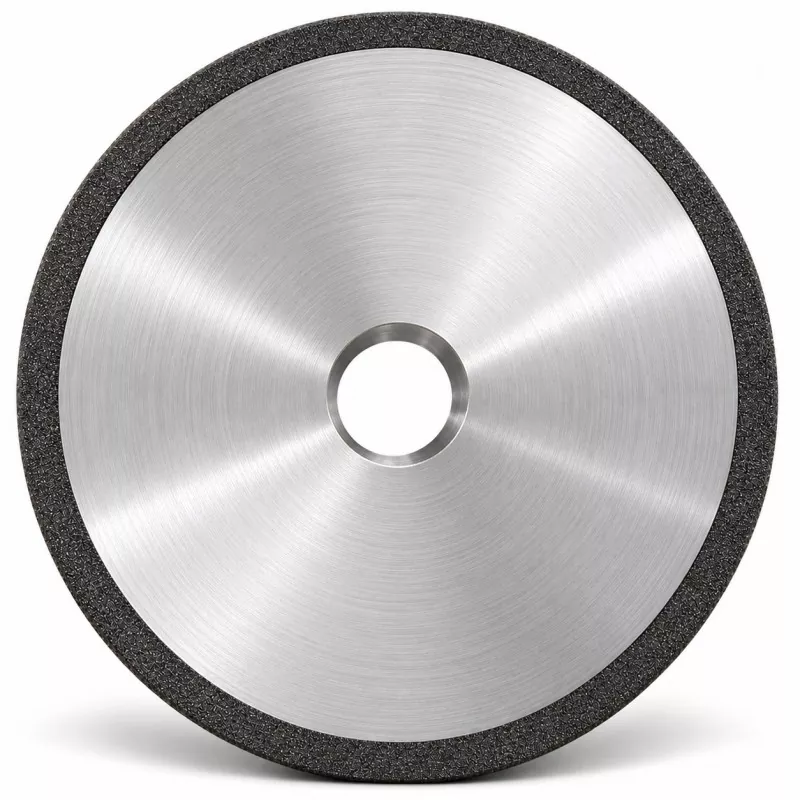
Vitrified Bond CBN Grinding Wheels for Hardened Steel
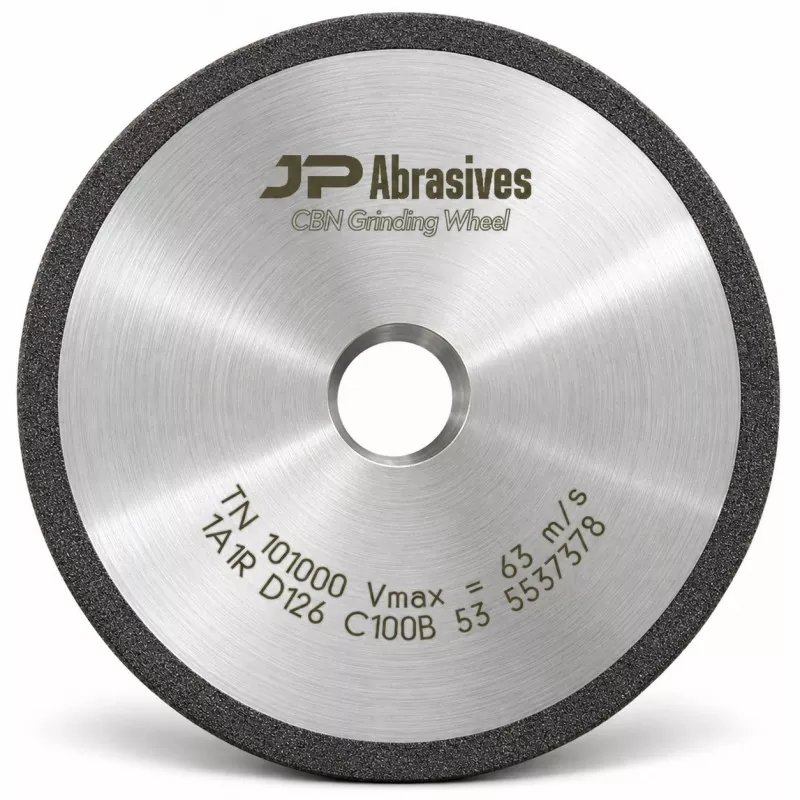
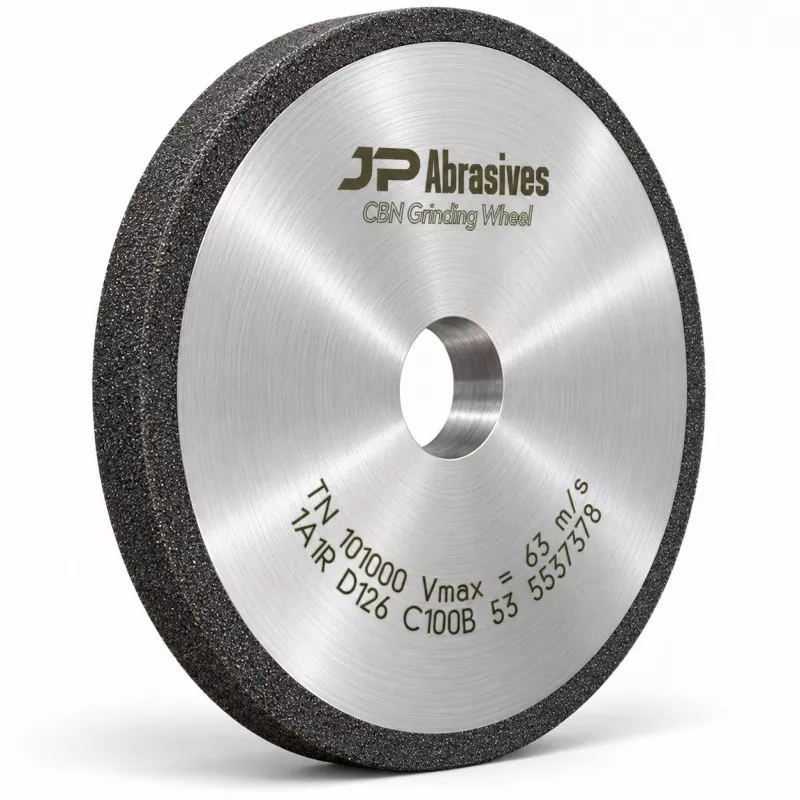
JP Abrasives B1 Vitrified Bond CBN Grinding Wheels for Hardened Steel are SUPERABRASIVE solutions for precision grinding of hardened ferrous materials. Built around cubic boron nitride abrasive, a vitrified bond system and the 1A1 straight-wheel platform, B1 is positioned for OD, cylindrical and surface grinding of hardened steel components where production stability, dimensional control and cost per accepted part are critical.
B1 establishes the first core product platform within JP Abrasives CBN SUPER ABRASIVES. It is dedicated to precision grinding of hardened steels and related ferrous workpieces using CBN, vitrified bond technology and the 1A1 straight-wheel platform.
Core Positioning — High-Performance Hardened Steel Grinding
B1 is designed for production environments that require more than a conventional abrasive wheel. The Vitrified Bond CBN Grinding Wheels for Hardened Steel family targets hardened components where wheel wear, thermal load, dimensional drift, dressing frequency and machine utilization directly affect manufacturing economics.
The commercial objective is not simply a longer-lasting wheel. The objective is a repeatable grinding process that produces more accepted parts between dressing and wheel changes while maintaining the required geometry and surface condition.
Primary Materials & Grinding Conditions
Core Workpiece Materials
· Hardened steel components
· Bearing steel, including applications comparable to 52100 / 100Cr6 families where the final wheel specification is approved
· Tool steels and die steels
· Hardened alloy steels
· High-speed steel where the process and specification are validated
· Selected heat-treated ferrous materials requiring CBN precision grinding
Final suitability depends on steel grade, hardness, heat treatment, stock removal, contact geometry and machine conditions. Material names alone are not sufficient to release a production wheel specification.
Primary Grinding Processes
OD Grinding — Precision outside-diameter grinding of hardened shafts, rings, rollers and cylindrical components.
Cylindrical Grinding — Traverse or plunge grinding where roundness, diameter stability and repeatable production are central requirements.
Surface Grinding — Flat-surface and thickness-control operations on hardened steel and tool-steel components.
Production Grinding — Automated or repetitive grinding cycles where wheel life, dressing interval, cycle time and process capability must be managed together.
ID grinding, bearing-race grinding and form grinding can be developed as later B1 application extensions when supported by verified production specifications. The launch positioning should remain focused on 1A1 OD, cylindrical and surface grinding.
Why CBN for Hardened Ferrous Materials
CBN is a synthetic superabrasive engineered for hard ferrous materials. In hardened-steel grinding, its role is to maintain cutting capability under high hardness and production loads while supporting longer usable wheel life than conventional abrasive systems in suitable applications.
B1 should therefore be specified by the complete grinding system: steel grade and hardness, CBN grit, concentration, vitrified bond structure, wheel geometry, dressing strategy, wheel speed, feed, coolant and machine rigidity.
Vitrified Bond Technology
The vitrified bond is the defining B1 bond platform. Its rigid, dressable structure can be engineered with porosity that supports coolant access and chip clearance while maintaining wheel form. These characteristics make vitrified CBN particularly relevant to automated and high-volume hardened-steel precision grinding.
Bond structure must be selected for the actual contact conditions. An overly closed or hard-running specification may increase loading and thermal stress; an overly open or weak specification may sacrifice form retention or wheel life. B1 qualification therefore treats bond, porosity and dressing as production variables rather than generic product claims.
1A1 — Core B1 Wheel Architecture
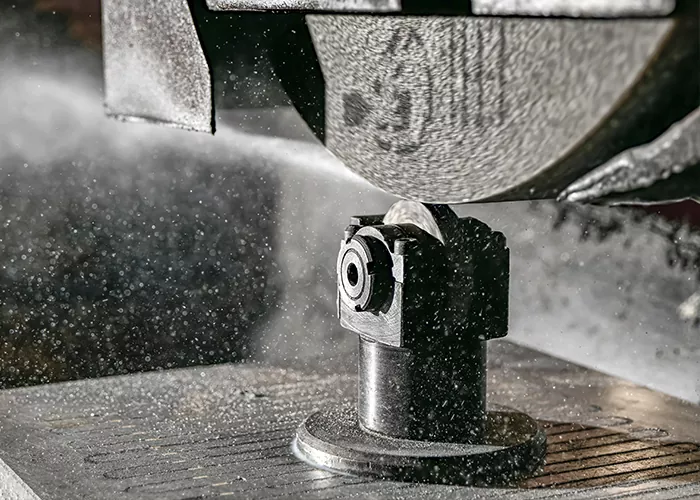
The 1A1 straight-wheel geometry provides a stable peripheral grinding platform for OD, cylindrical and surface grinding. It creates a clear first product architecture for B1 while allowing diameter, width, bore, CBN layer depth and working-face specification to be customized within the verified manufacturing range.
Final dimensions, CBN layer construction, core material, grit, concentration, bond code and maximum operating speed must come from the approved JP Abrasives / production specification. These values should not be generalized from competitor products.
Application Focus by Workpiece
Bearing Steel Components — B1 can be qualified for hardened bearing rings, races, rollers and related precision components where diameter consistency, roundness, surface condition and cycle stability are important.
Hardened Shafts & Cylindrical Components — OD and cylindrical grinding applications can prioritize diameter control, wheel form, dressing interval and accepted parts per wheel.
Tool & Die Steel Components — For hardened tool-steel and die-steel parts, wheel selection should account for grade, hardness, contact area, stock removal and risk of grinding burn or dimensional distortion.
High-Speed Steel — CBN is technically relevant to HSS; however, B1 website claims should remain tied to approved specifications and actual application testing rather than treating all HSS operations as interchangeable.
Core Buyer Value
High Grinding Efficiency — CBN cutting capability supports productive grinding of hardened ferrous materials when wheel specification and machine conditions are correctly matched.
Dimensional Stability — Rigid vitrified construction and controlled dressing support repeatable diameter, geometry and size control in production grinding.
Controlled Thermal Load — A correctly specified vitrified CBN structure, effective cutting action and coolant access can help manage grinding energy and heat input on hardened components.
Long Wheel Life — CBN durability and application-matched bond structure can extend useful wheel life and reduce wheel-change frequency compared with conventional abrasive processes in suitable applications.
Reduced Dressing — Stable wheel form and an engineered dressing strategy can increase the interval between dressing events while maintaining process control.
Lower Cost per Part — Longer production runs, fewer dressing interruptions, stable dimensions and reduced reject/rework risk can lower total grinding cost per accepted component.
Production Economics — Cost per Accepted Part
B1 should be sold on production economics rather than wheel price alone. In hardened-steel grinding, machine time, dressing downtime, wheel changes, rejected components and dimensional correction can outweigh the purchase price of the grinding wheel.
Recommended model: Wheel Cost + Machine Cycle Time + Dressing Time + Wheel Change / Setup + Rework / Reject Risk = Total Grinding Process Cost. The preferred KPI is Cost per Accepted Part under a defined material, machine and grinding cycle.
Technical Selection Parameters
1. Steel Grade & Hardness — Identify exact steel grade, heat-treatment condition and hardness.
2. Component Geometry — Provide OD, width, length, contact area and critical dimensional features.
3. Grinding Method — Define OD, cylindrical, surface or another approved process; specify plunge or traverse where relevant.
4. Stock Removal — State total stock and removal per pass or cycle.
5. Surface / Dimensional Requirement — Define roughness, diameter tolerance, roundness, cylindricity, flatness or other acceptance criteria where applicable.
6. Wheel Dimensions — Provide required or current OD, width, bore and CBN layer dimensions.
7. CBN Grit & Concentration — Select according to removal, finish, grinding force, form retention and wheel-life target; publish only approved specifications.
8. Vitrified Bond / Porosity — Match bond structure and porosity to contact area, coolant, chip clearance, dressing and production requirements.
9. Machine & Wheel Speed — Provide machine make/model, spindle power, RPM or wheel speed and relevant rigidity/runout information.
10. Coolant — Define coolant type, concentration and delivery method where applicable.
11. Dressing Strategy — Provide dresser type, dressing frequency, depth and current dressing issue.
12. Production KPI — Provide cycle time, parts per shift, current wheel life, dressing interval, reject rate and target cost per part.
Recommended Qualification Metrics
· Cycle time per component
· Material removal per cycle
· Diameter / thickness consistency
· Roundness / cylindricity / flatness where applicable
· Surface condition and specified roughness
· Grinding burn / discoloration observations where relevant
· Wheel wear and form retention
· Dressing interval and dressing time
· Accepted parts per dressing interval
· Accepted parts per wheel
· Reject / rework rate
· Total grinding cost per accepted component
B1 Position within JP Abrasives CBN SUPER ABRASIVES
|
B1 — Vitrified Bond CBN Grinding Wheels for Hardened Steel |
First core series within CBN SUPER ABRASIVES; hardened steel / bearing steel / tool steel; OD / cylindrical / surface grinding; core value: High-Performance Hardened Steel Grinding. |
Application Engineering & Qualification Workflow
B1 qualification should begin with the existing grinding process. The buyer should provide material, hardness, component drawing, machine, current wheel, stock removal, cycle time, coolant, dressing method, surface requirement and dimensional target.
Recommended workflow: Application Review → Current Process Benchmark → B1 Wheel Specification → Sample Trial → Dimensional / Surface Inspection → Dressing & Parameter Adjustment → Production Trial → Cost-per-Part Review → Approved Specification.
Wholesale, OEM & Private Label
JP Abrasives B1 is intended for bearing manufacturers, precision machining companies, automotive and powertrain suppliers, tool-and-die operations, industrial grinding specialists and superabrasive distributors. Initial assortments should be built around verified 1A1 hardened-steel grinding applications rather than a broad unqualified CBN catalog.
OEM and Private Label programs may include approved wheel specifications, technical labels, packaging, barcodes, master cartons and customer-specific SKU planning. Performance values must remain tied to verified production data and application tests.
RFQ Information for Industrial Buyers
· Exact workpiece material / steel grade
· Heat treatment and hardness
· Component drawing or OD / width / length
· Grinding method: OD / cylindrical / surface
· Plunge / traverse mode where applicable
· Stock removal per cycle
· Target surface roughness and dimensional criteria
· Current wheel size and specification
· Machine brand/model and spindle power
· RPM / wheel speed
· Coolant type and delivery
· Dresser type / dressing parameters
· Current cycle time
· Current dressing interval and wheel life
· Current issue: burn, wear, dimensional drift, finish, dressing or productivity
· Monthly / annual wheel consumption
· JP Abrasives brand / OEM / Private Label requirement
Safety & Technical Data
CBN grinding wheels must be selected, mounted, dressed and operated according to the approved wheel specification, machine requirements and applicable safety instructions. Maximum operating speed must never be exceeded. Machine guarding, correct mounting, wheel inspection and appropriate PPE are required.
The final publish exact wheel dimensions, CBN layer, grit, concentration, vitrified bond code, maximum operating speed, coolant requirements, dressing instructions and machine compatibility only after the corresponding JP Abrasives has been verified.
Frequently Asked Questions
Why use CBN for hardened steel?
CBN is a superabrasive suited to hard ferrous materials. In the correct process it supports productive grinding, long wheel life and stable production of hardened steel components.
Why use a vitrified bond?
Vitrified CBN provides a rigid, dressable structure that can be engineered for porosity, coolant access, chip clearance and form retention in precision production grinding.
What is the primary B1 wheel shape?
B1 launches around the 1A1 straight-wheel platform for OD, cylindrical and surface grinding. Additional shapes should be added only after production capability and market demand are verified.
What applications define the B1 product family?
B1 is defined by precision grinding of hardened ferrous materials, led by bearing steel, tool steel and hardened alloy-steel components in OD, cylindrical and surface grinding applications.
Can B1 guarantee cooler grinding or no burn?
No universal thermal guarantee should be made. Grinding temperature depends on the wheel specification, material, machine, feed, speed, coolant, dressing and contact conditions.
What information is needed for a quote?
Provide steel grade, hardness, component geometry, grinding method, stock removal, surface/dimensional target, wheel size, machine, speed, coolant, dressing, current wheel and production volume.
Request an Application Review / Request a Quote
For B1 hardened-steel grinding, submit: Steel Grade + Hardness + Component Drawing/Dimensions + OD/Cylindrical/Surface Process + Stock Removal + Surface/Dimensional Requirement + Current Wheel + Machine/Spindle + RPM/Wheel Speed + Coolant + Dressing + Cycle Time + Current Wheel Life + Quantity + JP Brand/OEM.
Send Inquiry
Contact Info
-
Address
China:No.263,Central Street,Dadian Town,Junan County,Linyi City,Shandong Province,China
-
Tel
-
Email