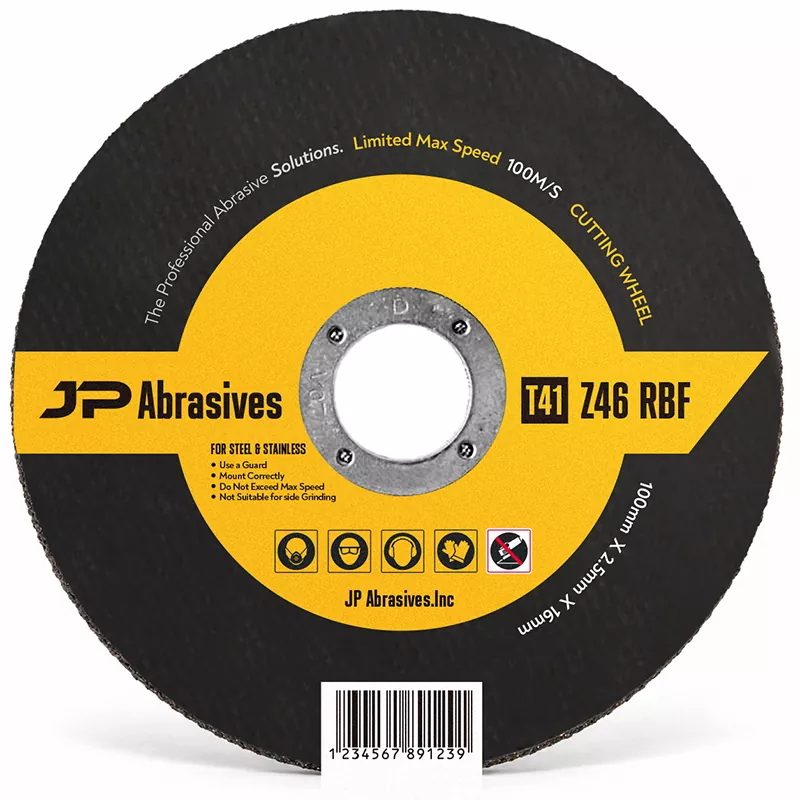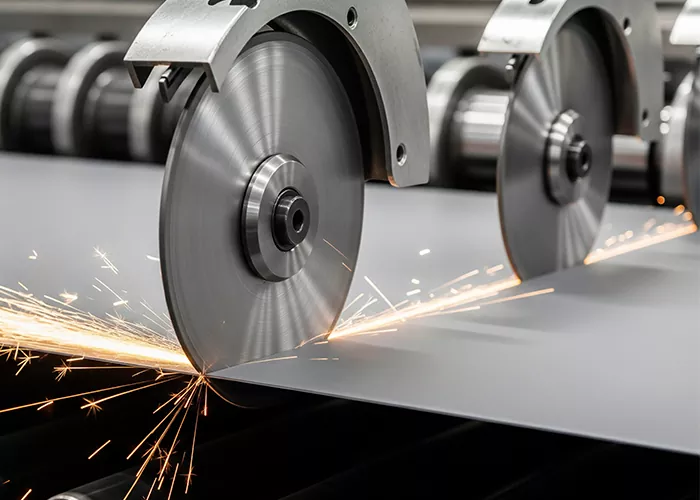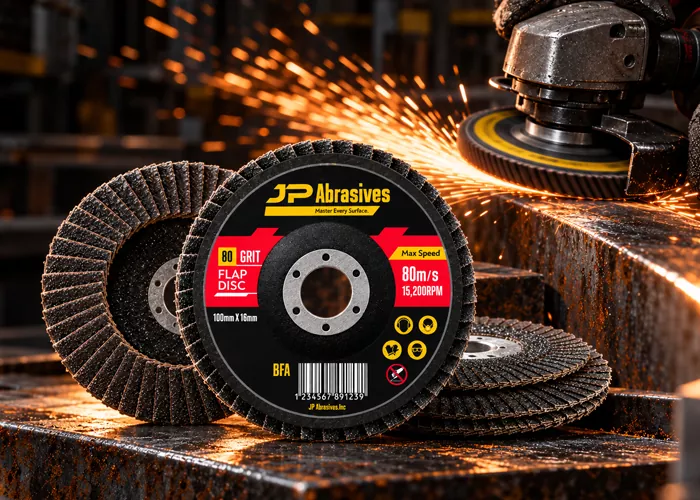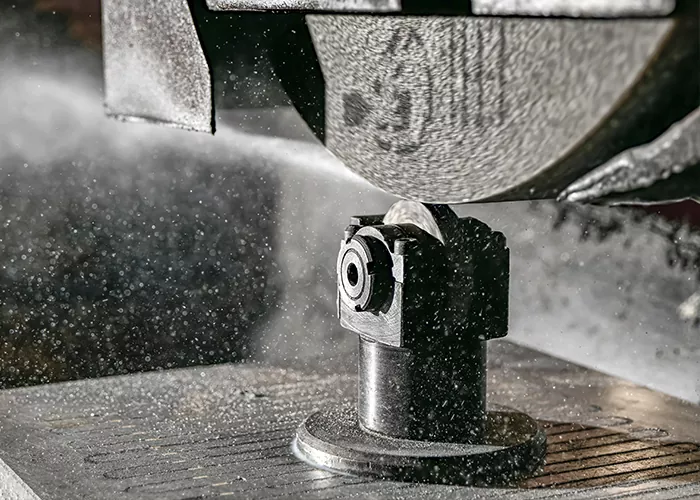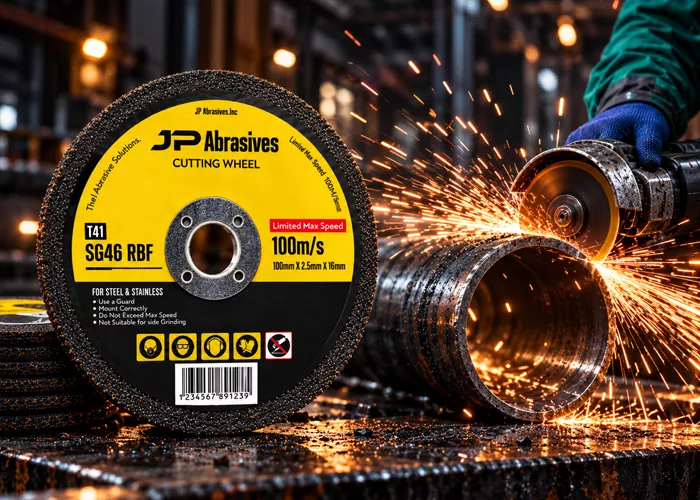
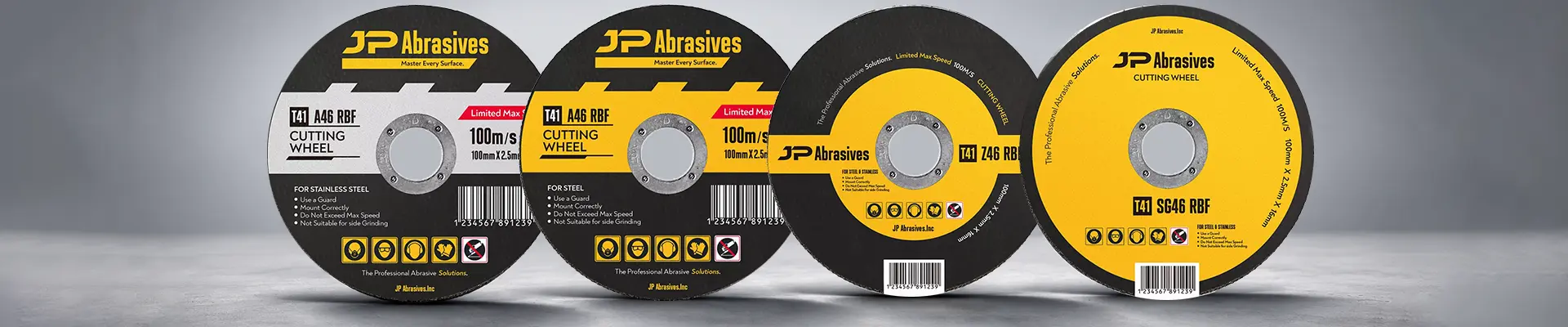
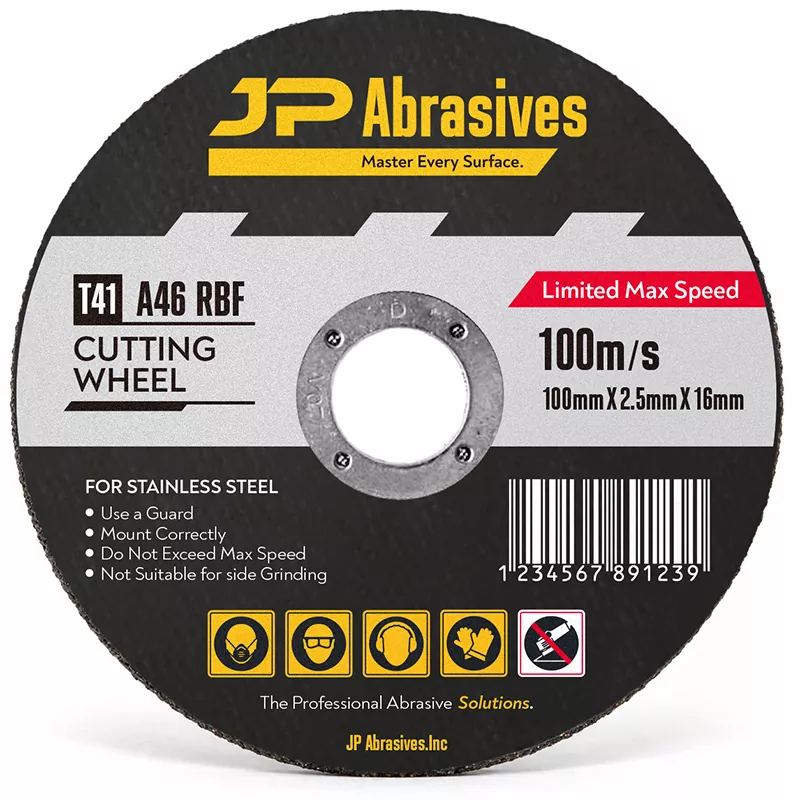
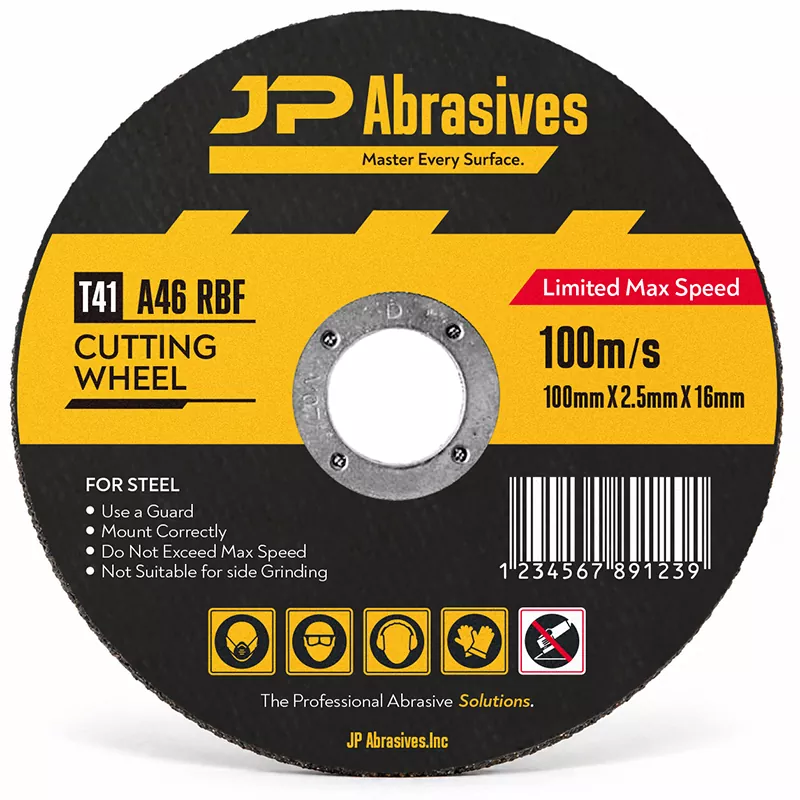
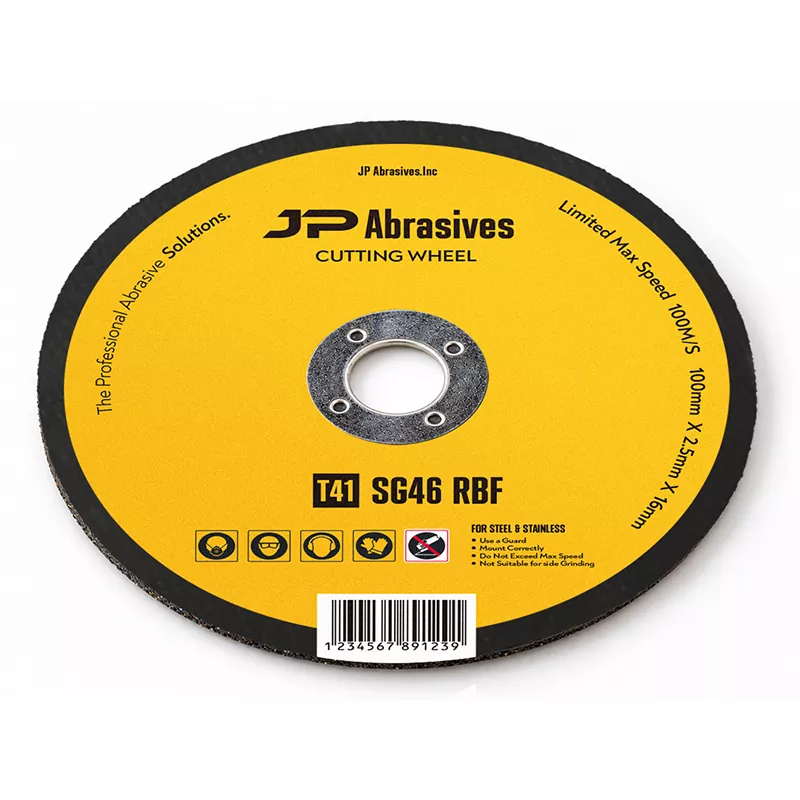
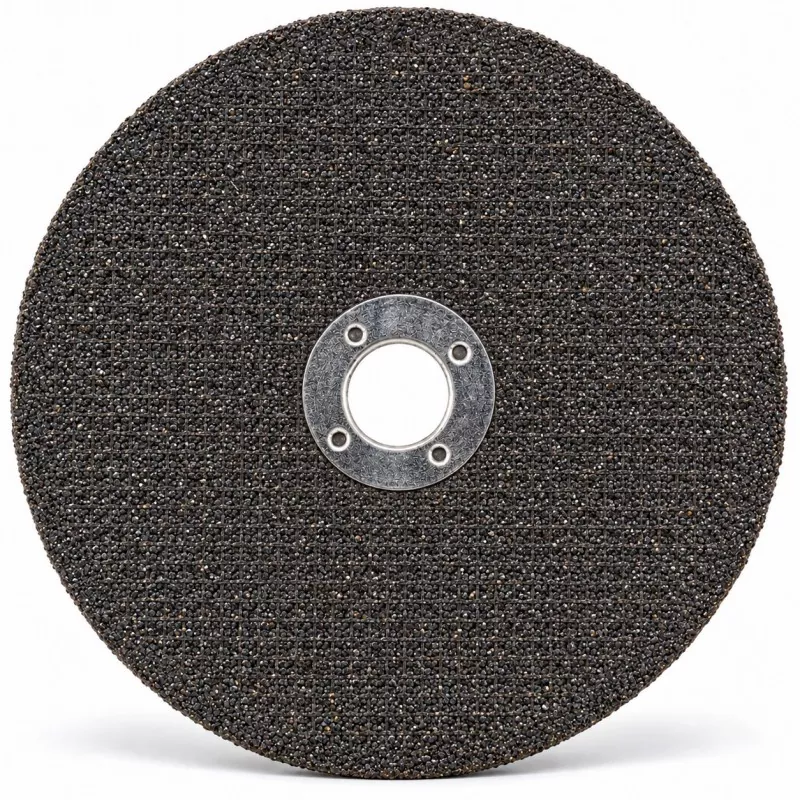
C-Series Ceramic Cutting Wheel
JP Abrasives C-Series Ceramic Cutting Wheel is a PREMIUM cut-off solution developed for demanding metals and production environments where cutting speed, wheel utilization and output directly affect manufacturing cost. Built around Ceramic Alumina, the C-Series targets stainless steel, high-strength steel, selected alloy steels and other tough-metal applications subject to final product validation.
For industrial buyers sourcing a Ceramic Cut-Off Wheel, High Performance Cutting Wheel or Production Cutting Wheel, the C-Series is positioned around three commercial priorities: Fast Cutting, High Productivity and Long Cutting Performance.
High-Performance Cutting for Demanding Metals
The C-Series is not positioned as a general-purpose economy wheel and is not primarily designed around ultra-thin sheet cutting. Its value becomes more relevant when the material is harder to cut, the section is heavier, cutting is repetitive, or operator time and machine utilization have a measurable effect on production cost.
Typical workloads include repeated cutting of stainless tube, thick-wall pipe, bar, structural profiles, high-strength components and other demanding metal sections. In these applications, a small reduction in cutting time can accumulate across hundreds or thousands of cuts.
The purchasing question therefore moves beyond unit price: how many qualified cuts can be completed per hour, how many cuts can be produced per wheel, and what is the total cost per cut?
Ceramic Alumina Abrasive Technology
Ceramic Alumina is used in high-performance abrasive systems because its grain structure can support continued generation of fresh cutting edges under appropriate grinding and cutting conditions. This self-renewing behavior is particularly relevant where sustained cutting action is required.
In a resin-bonded reinforced cut-off wheel, the final result depends on the complete system: Ceramic Alumina content, supporting abrasive blend where applicable, bond, reinforcement, wheel thickness, machine power, operating speed, contact geometry and workpiece material.
The final website must use the actual JP Abrasives formulation and approved SKU data. Ceramic content, grain blend, life improvement, speed improvement and other numerical performance claims should not be stated until verified by product testing.
Stainless Steel Production Cutting
Stainless steel is a primary application category for the C-Series. Production environments may repeatedly cut tube, pipe, bar, profile or fabricated sections before welding, machining or assembly.
When cutting volume is high, the abrasive becomes part of the production cycle. Cutting Time per Cut, Cuts per Wheel and Wheel Changes per Shift can influence labor utilization and throughput.
The Ceramic Cutting Wheel is therefore positioned for professional stainless production where sustained cutting performance matters. Where the main requirement is stainless-specific routine cutting rather than maximum productivity, the INOX Cutting Wheel remains a separate PROFESSIONAL product category.
High-Strength Steel Cutting
High-strength steels can place greater demands on abrasive cutting systems. Material properties, section thickness and cutting volume can increase cutting time and abrasive consumption compared with routine mild-steel work.
The C-Series is intended for applications where a High Performance Cutting Wheel must maintain effective cutting through repeated high-load operations. Final suitability must be verified against the actual steel grade, hardness, section and machine.
For buyers, the relevant comparison is not simply whether two wheels can complete the cut, but which system delivers the required throughput with acceptable wheel consumption and workpiece condition.
Alloy and Tough-Steel Applications
Selected alloy steels and other tough metal applications may benefit from a Ceramic Alumina cutting system when validated for the specific material and process.
Because alloy designation alone does not define cutability, buyers should provide material grade, hardness where relevant, section geometry and current cutting conditions. The same product should not be represented as universally suitable for every alloy or hardened steel.
Application review and sample testing are especially important for these materials.
Thick-Wall Tube, Bar and Structural Profiles
The C-Series is particularly relevant where the wheel remains engaged in the cut for longer periods than in light sheet work. Thick-wall tube, solid bar and structural profiles create sustained contact and can expose limitations in cutting speed or wheel life.
For these workpieces, buyers should evaluate cut time, wheel wear, cut completion consistency and the number of usable cuts obtained from each wheel.
The objective is productive cutting of demanding sections, not merely achieving the narrowest possible kerf.
Production Cutting and Repetitive Operations
A Production Cutting Wheel should be evaluated as part of the manufacturing cycle. In repetitive operations, the abrasive affects operator utilization, machine availability, changeover frequency and hourly output.
If a facility makes only occasional cuts, premium ceramic technology may not provide the same economic value as it does in a high-volume environment. The C-Series is intended for operations where cutting frequency is sufficient for productivity improvements to matter.
This creates a clear distinction from STANDARD general-purpose cutting products, which prioritize broad application coverage and cost-effective everyday use.
Fast Cutting
Fast Cutting should be measured against a defined workpiece and cutting method. A useful comparison records the time required to complete the same cut under controlled machine and operator conditions.
Cutting speed should not be pursued independently of wheel consumption, cut stability or safety. The commercial objective is to shorten productive cutting time while maintaining useful wheel performance.
Any published percentage improvement should be based on documented comparative testing against a defined benchmark.
Long Cutting Performance
Long Cutting Performance refers to the ability of the cutting system to continue delivering useful cutting action through repeated operations. It should not be presented as a universal life multiplier.
Industrial buyers can evaluate this by recording Cuts per Wheel, wheel diameter loss, change frequency and cutting-time progression as the wheel is consumed.
The best result is not necessarily the wheel with the longest physical life; it is the wheel that provides the strongest balance of cutting rate, usable life and cost per completed cut.
Core Buyer Value
Fast Cutting
Designed for demanding applications where cutting time directly affects production output.
High Productivity
Supports evaluation by cuts per hour, machine utilization and operator throughput rather than wheel price alone.
Long Cutting Performance
Focused on sustained useful cutting action across repetitive industrial cutting cycles.
Demanding-Metal Capability
Positioned for stainless steel, high-strength steel and selected alloy/tough-steel applications subject to specification and testing.
Reduced Changeover Potential
Where validated, stronger wheel utilization can reduce the frequency of interruptions for wheel replacement.
Premium Production Positioning
Creates a dedicated high-performance ceramic tier above routine STANDARD and PROFESSIONAL cutting-wheel applications.
Five Procurement KPIs
1. Cuts per Minute / Cuts per Hour
Measures production throughput for a standardized workpiece and cutting method.
2. Cuts per Wheel
Tracks how many acceptable cuts are completed before the wheel reaches its defined end-of-use condition.
3. Cutting Time per Cut
Measures the actual time required to complete one defined cut and is particularly useful in repetitive production.
4. Wheel Changes per Shift
Captures downtime and operator interruption associated with abrasive replacement.
5. Cost per Cut
Combines abrasive consumption and process time into a purchasing metric that can be compared across competing products.
Total Cutting Cost
For production cutting, purchase price per wheel can be a poor indicator of manufacturing economics. A higher-performing wheel may justify a higher unit price if it reduces cutting time, wheel consumption or changeover downtime.
Cost per Accepted Cut = (Consumed Wheel Cost + Cutting Labor and Machine Cost + Wheel-Change Cost + Secondary Cleanup Cost) / Number of Accepted Cuts. Convert time to cost using the applicable hourly rates and avoid counting the same labor or downtime twice.
For automated or highly standardized operations, buyers may also track Cost per 100 Cuts, Output per Shift and abrasive cost as a percentage of total cutting-process cost.
Typical Applications
· Repeated stainless steel cutting
· High-strength steel component cutting
· Thick-wall tube and pipe cutting
· Solid bar cutting
· Structural profile cutting
· Production cut-off operations
· Heavy fabrication cutting
· Selected alloy and tough-steel cutting after validation
· Automotive and machinery component preparation
· Industrial metal processing
Target Industrial Customers
· Metal fabrication
· Stainless steel fabrication
· Structural steel manufacturing
· Automotive component manufacturing
· Machinery manufacturing
· Industrial production plants
· Tube and pipe processing
· Heavy fabrication
· Professional welding and cutting distributors
· Industrial abrasive distributors
Where the C-Series Should Not Be Positioned
For economical everyday carbon-steel cutting, select 02.1 A-Aluminum Oxide Cutting Wheel according to the approved SKU and application.
It should not replace the INOX category where the buyer's main search intent is routine professional stainless cutting and stainless-specific product selection.
Ultra-thin describes a wheel thickness or specification attribute, not a separate product series. For thin sheet, narrow-kerf or thin-wall cutting, choose an approved thickness within the relevant A, INOX, Z or C series based on material and machine suitability.
Position within the JP Abrasives Cutting Wheel Range
|
1 A-Aluminum Oxide Cutting Wheel | STANDARD |
Aluminum Oxide / Brown Fused Alumina. Economical everyday cutting of carbon steel, pipe, profiles and plate; approved SKUs define suitability. |
|
2 INOX Cutting Wheel | PROFESSIONAL |
Premium Aluminum Oxide. Professional routine stainless-steel cutting of tube, pipe and sheet; stainless suitability follows approved formulation and SKU data. |
|
3 Z-Series Zirconia Cutting Wheel | PREMIUM |
Zirconia Alumina. Higher-load industrial steel cutting; evaluate productivity, useful life and cost per accepted cut against the actual workload. |
|
4 C-Series Ceramic Cutting Wheel | PREMIUM |
Ceramic Alumina. Thick-wall pipe, solid bar and profiles in sustained high-load production; stainless, high-strength steel and selected alloys after validation. |
C-Series vs. Z-Series Zirconia Cutting Wheel
Z-Series Zirconia Cutting Wheel uses Zirconia Alumina and is a PREMIUM option for higher-load industrial steel cutting. Its value centers on productive cutting, useful wheel life and cost per accepted cut in validated applications.
C-Series Ceramic Cutting Wheel uses Ceramic Alumina and is also PREMIUM. Its focus is sustained, high-load production cutting of thick-wall pipe, solid bar and profiles, including stainless steel, high-strength steel and selected alloys after validation. Ceramic grain technology distinguishes C-Series from the zirconia-based Z-Series; it does not establish a universal performance ranking.
Select Z or C using controlled trials on the actual material, section and machine. Compare cutting time, accepted cuts per wheel, cut quality, changeovers and cost per accepted cut. C-Series is preferred when the validated productivity benefit justifies its total process cost.
Controlled Comparative Testing
Ceramic products should be qualified using a repeatable test rather than subjective cutting feel. Use the same workpiece material, section, machine, operating speed, operator method and end-of-use criteria.
Record Cutting Time per Cut, Cuts per Wheel, Wheel Changes and total elapsed time. Where appropriate, record cut quality, burr condition and workpiece heat observations.
Recommended process: Application Review → Benchmark Definition → Sample Test → Production Trial → Cost-per-Cut Analysis → Bulk Approval.
Technical Selection Data
Selection should consider material grade, hardness where applicable, section geometry, wheel diameter and thickness, arbor, machine type, machine power, maximum operating speed and production volume.
Wholesale, Bulk and Production Supply
JP Abrasives supports qualified sourcing programs for industrial distributors, importers, welding-supply companies and production users. C-Series projects should begin with application data and expected annual consumption so the product assortment reflects real production requirements.
OEM Ceramic Cutting Wheel / Private Label
Qualified OEM Ceramic Cutting Wheel and Private Label programs can be developed around a PREMIUM ceramic product tier. Scope may include series naming, center-label design, packaging, barcodes, master cartons and approved SKU planning.
Performance claims such as Fast Cutting, Long Cutting Performance or productivity improvement should remain consistent with verified product data. Numerical claims require documented comparative testing.
RFQ Information for Industrial Buyers
· Workpiece material and exact grade
· Hardness where relevant
· Application and production process
· Workpiece section: tube, pipe, bar, profile or component
· Wall thickness / section dimensions
· Required wheel diameter, thickness and arbor
· Machine type, power and RPM
· Current cutting time per cut
· Current cuts per wheel
· Current wheel / benchmark product
· Daily, monthly or annual cutting volume
· Target productivity or cost-per-cut objective
· Packaging and barcode requirements
· JP Abrasives brand, OEM or private-label requirement
Safety and Operating Requirements
Cut-off wheels must be selected, mounted and operated according to the approved product specification, machine requirements and applicable safety instructions. Maximum operating speed must never be exceeded.
Cut-off wheels are designed for cutting and should not be used for grinding or inappropriate side loading. Operators should use correct guarding, mounting and PPE and inspect the wheel and machine before operation.
The final website must use safety and operating information from the approved JP Abrasives SKU and label documentation.
Frequently Asked Questions
What is the C-Series Ceramic Cutting Wheel designed for?
It is positioned for demanding metals and repetitive production cutting, particularly stainless steel, high-strength steel and selected alloy or tough-steel applications after validation.
How is it different from A-Aluminum Oxide Cutting Wheel?
02.1 A-Aluminum Oxide Cutting Wheel uses Aluminum Oxide / Brown Fused Alumina and is STANDARD for economical everyday carbon-steel cutting. C-Series uses Ceramic Alumina and is PREMIUM for demanding, repetitive production cutting.
How is it different from an INOX Cutting Wheel?
INOX is a PROFESSIONAL stainless-specific category. C-Series is a PREMIUM ceramic performance category for higher-load and repetitive cutting where throughput and wheel utilization are major purchasing criteria.
How is it different from Z-Series Zirconia Cutting Wheel?
Both are PREMIUM. Z-Series uses Zirconia Alumina for higher-load industrial steel cutting; C-Series uses Ceramic Alumina with a focus on demanding sections and sustained high-load production. Choose using the actual cutting workload and controlled cost-per-cut results, rather than assuming ceramic always outperforms zirconia.
Is Ultra-Thin a separate product series?
No. Ultra-thin is a thickness or specification attribute within an approved product series. For thin sheet or minimum-kerf cutting, confirm the material, thickness, machine and approved SKU. These are not the primary C-Series production workloads.
What should buyers measure in a production trial?
Cutting Time per Cut, Cuts per Wheel, Cuts per Hour, Wheel Changes per Shift and Cost per Cut are the primary commercial KPIs.
Request a Production Cutting Test / Request a Quote
For demanding-metal and high-volume cutting, submit: Material Grade + Hardness + Section Geometry + Dimensions + Wheel Size + Machine/RPM + Current Cut Time + Current Cuts per Wheel + Production Volume + Benchmark Wheel + Target Cost per Cut + JP Brand/OEM.
JP Abrasives - Professional Abrasive Solutions. Master Every Surface.
Send Inquiry
Contact Info
-
Address
China:No.263,Central Street,Dadian Town,Junan County,Linyi City,Shandong Province,China
-
Tel
-
Email